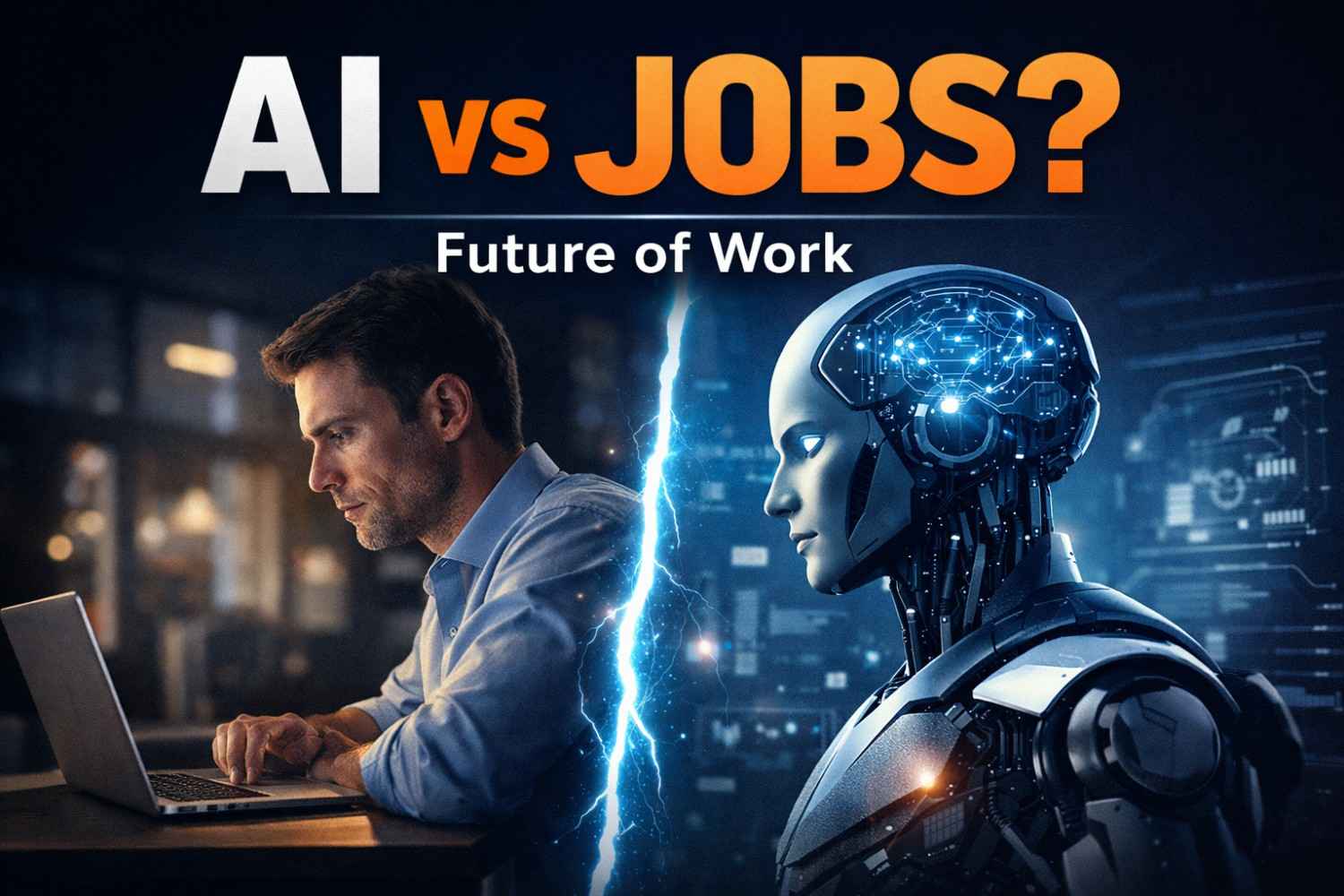
Artificial intelligence has moved from experimental labs into everyday workflows, and the ai future of work is not a distant concept — it’s unfolding right now. Companies of all sizes are rethinking roles, workflows, and productivity as intelligent systems automate routine tasks, augment decision-making, and create new forms of human–machine collaboration. Understanding how the ai future of work is developing helps employees, managers, and policymakers prepare for shifts in skills, job design, and organizational culture.
Table of Contents
How the ai future of work Is Reshaping Jobs Today
The ai future of work is changing where value is created in organizations. Repetitive tasks in finance, customer service, and operations are increasingly handled by AI systems, freeing human workers to focus on creativity, strategy, and relationship-based tasks. For many roles, this means a transition from manual execution to oversight, interpreting AI outputs, and handling exceptions.
Automation through AI agents is a core part of this shift; intelligent process automation can handle scheduling, data entry, and simple decision trees while escalating complex situations to human colleagues. Tools like AI agents in workplace automation are already being piloted and deployed, demonstrating productivity gains and faster turnaround times.
Skills, Training, and the ai future of work
As the ai future of work accelerates, the demand for new skills grows. Technical capabilities such as data literacy, prompt engineering, and basic machine learning understanding are valuable, but soft skills — critical thinking, creativity, empathy, and change management — are equally important. Organizations will need to invest in continuous learning programs and career pathways that reflect hybrid human–AI roles.
Reskilling versus upskilling
Businesses face a choice between reskilling workers for different roles or upskilling them to work alongside AI. Effective programs mix hands-on projects, mentorship, and micro-credentials so employees can apply new competencies immediately. The ai future of work rewards adaptability; workers who can translate domain knowledge into collaboration with AI systems will have a competitive edge.
Productivity, Tools, and the future of work
Practical productivity gains are one of the clearest indicators that the ai future of work is here. AI-enhanced collaboration platforms, intelligent document summarizers, and automated scheduling are reducing friction in daily operations. For organizations exploring these options, evaluating solutions that integrate with existing workflows is key. Learn more about practical toolsets at AI tools transforming work.
Daily tasks that are changing now
- Email triage and draft generation using language models
- Customer queries routed and partially answered by conversational AI
- Sales forecasting supported by predictive analytics
- Automated code suggestions and testing in software development
Each of these examples contributes to the ai future of work by reducing time spent on low-value activities and increasing the time available for complex problem solving.
Organizational Design and the future of work
Workplaces are reorganizing to capture the benefits of AI while maintaining human judgment where it matters. Cross-functional teams that combine data scientists, domain experts, and operations staff create faster feedback loops and better models. Governance structures for AI — including ethical guidelines and oversight committees — help ensure that adoption supports fairness, accountability, and transparency.
Leadership and decision-making
Leaders are reframing decisions around human–AI complementarity. Rather than asking whether a technology can replace a person, successful organizations ask how AI can amplify human strengths. This approach changes performance metrics, incentives, and hiring criteria, aligning them with the realities of the ai future of work.
Economic and Policy Impacts of the future of work
The macroeconomic effects of AI adoption influence employment patterns, productivity growth, and income distribution. While some jobs are displaced, new roles focused on model governance, AI ethics, and system integration are emerging. Policy frameworks can accelerate positive outcomes by funding training initiatives, supporting labor mobility, and encouraging responsible AI deployment.
Global policy discussions reflect these shifts: organizations tracking the global future of work trends emphasize inclusive upskilling and social protections during transitions. Regionally tailored strategies are also important; for example, national initiatives in different countries shape how quickly the ai future of work is realized in local labor markets.
Sector Examples: Healthcare, Finance, and Manufacturing in the future of work
Different industries experience the ai future of work in distinct ways. In healthcare, AI assists diagnosis, triage, and personalized treatment planning while clinicians retain responsibility for patient care. Finance leverages AI for fraud detection, risk scoring, and customer personalization, reshaping compliance and advisory roles. In manufacturing, AI-powered predictive maintenance and robotics are enabling more flexible production lines and higher uptime.
Case studies and early wins
Early adopters report measurable outcomes: reduced processing times, higher customer satisfaction, and fewer operational errors. These wins demonstrate how the ai future of work is not theoretical—it’s a source of tangible business value that also requires careful change management to scale responsibly.
Equity, Ethics, and Preparing for the future of work
Equitable access to the benefits of AI is a central concern for the ai future of work. Without deliberate policy and corporate responsibility, automation can exacerbate existing inequalities. Ethical design practices, transparent model evaluation, and community engagement help create AI systems that serve broader social goals.
Efforts to build inclusive digital economies draw on both private and public initiatives. For example, national programs for technology adoption, like those outlined by government agencies, shape how diverse workforces engage with AI. Learn how governments are addressing adoption through resources such as India workforce AI adoption, which highlights strategies for skills development and industry collaboration.
Practical Steps for Organizations Navigating the ai future of work
Organizations can take concrete steps today to prepare for the ai future of work:
- Map tasks and identify where AI can augment human effort rather than replace it.
- Invest in employee learning programs that blend technical and interpersonal skills.
- Pilot small projects to measure impact, then scale successful initiatives.
- Establish governance that addresses privacy, fairness, and accountability.
- Engage stakeholders — employees, customers, regulators — in transparent conversations about change.
These actions help firms capture the benefits of AI while reducing disruption and building trust across stakeholders as the ai future of work evolves.
The ai future of work is unfolding now, with practical implications for jobs, skills, organizations, and policy. By focusing on complementary human–AI roles, investing in learning, and shaping responsible governance, businesses and workers can shape a future where AI amplifies human potential rather than displaces it. The sooner organizations act, the better positioned they will be to thrive in the ai future of work.


Leave a Reply