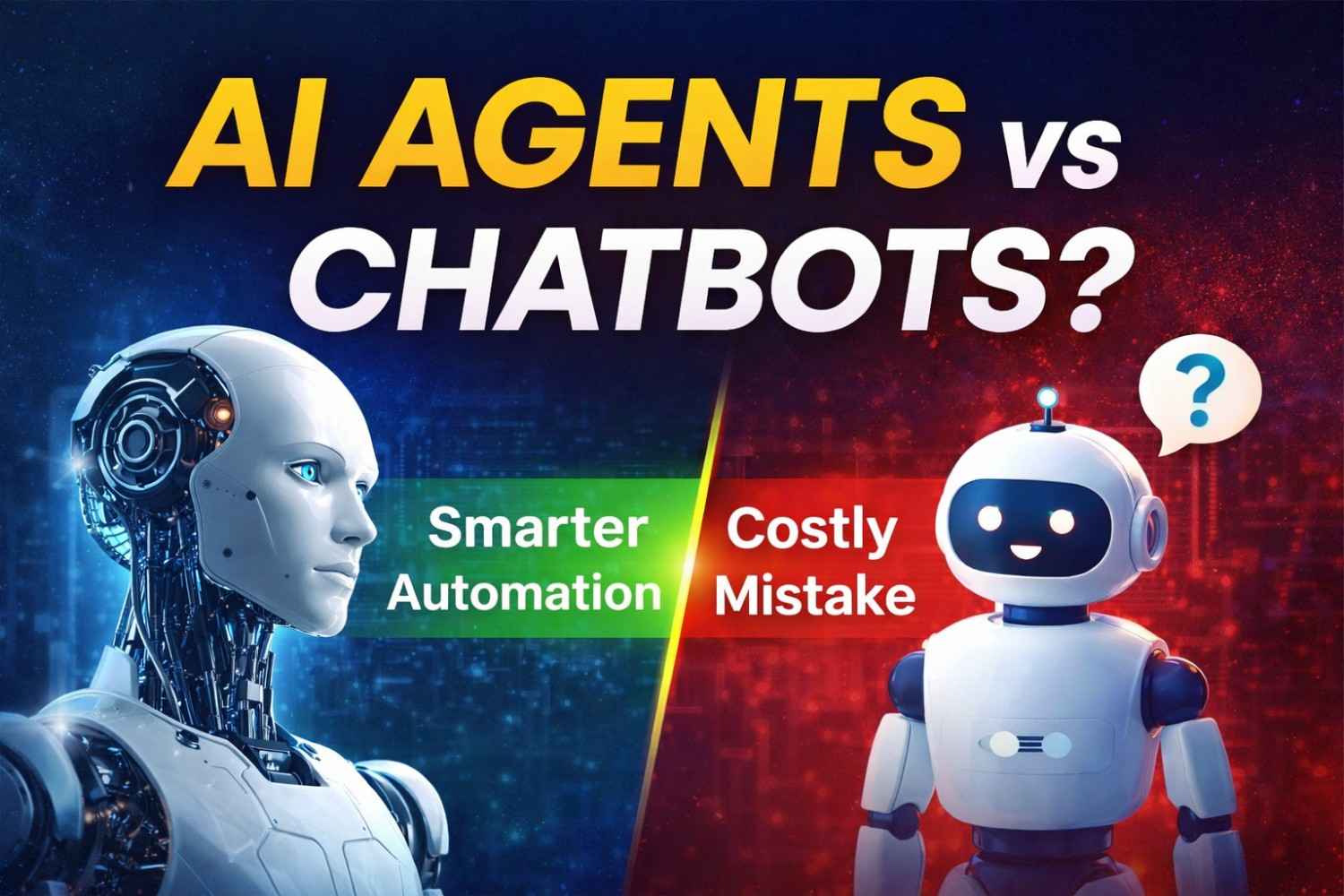
When deciding between AI Agents vs Chatbots, businesses and developers face a choice that can shape customer experience, operational cost, and product strategy. The debate around AI Agents vs Chatbots isn’t just semantic: it reflects deep differences in autonomy, orchestration, and expected outcomes. This post walks through what sets AI Agents apart from chatbots, where each makes sense, and how to avoid common costly mistakes while aiming for smarter automation.
Table of Contents
AI Agents vs Chatbots: core definitions and distinctions
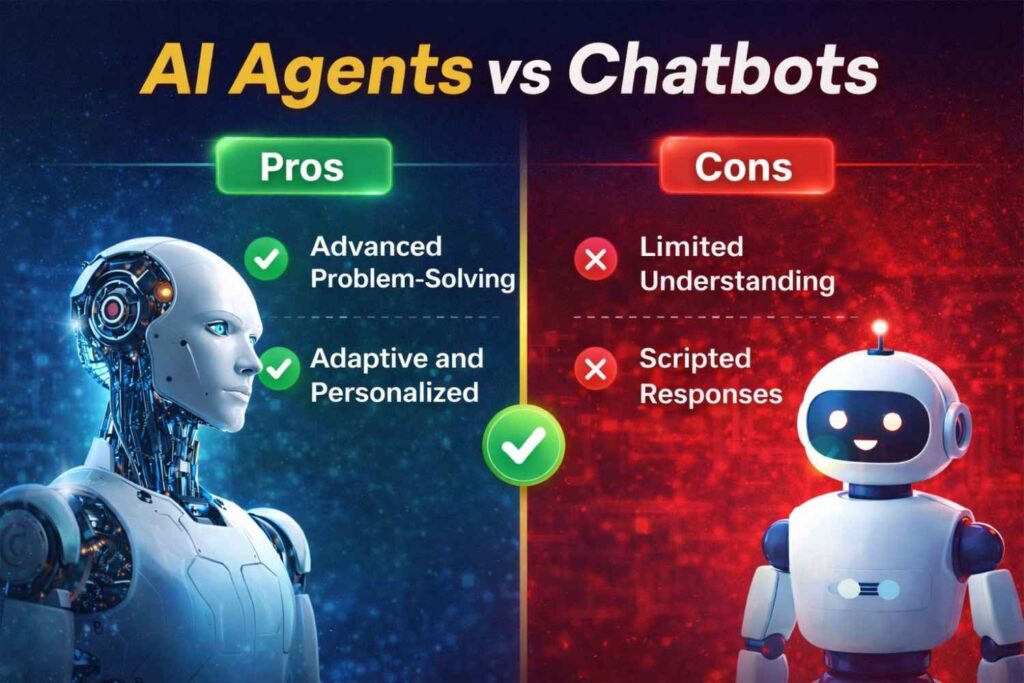
At the simplest level, AI Agents vs Chatbots can be distinguished by intent and capability. Chatbots traditionally answer questions and follow scripts inside defined conversational flows, while AI agents are designed to pursue goals autonomously, coordinate multiple tools, and make multi-step decisions. That distinction matters when you consider scaling, maintenance, and user expectations.
What a chatbot typically does
Chatbots excel at predictable interactions: handling FAQs, booking appointments, and routing customers. Many modern chatbots incorporate natural language understanding to seem more conversational, but they still largely operate within designed limits.
What an AI agent can do differently
An AI agent often combines planning, memory, tool use (like APIs and databases), and autonomy. Unlike a chatbot that waits for user prompts, an AI agent might proactively take steps: gather information, synthesize results, delegate tasks to services, and follow up to completion. These capabilities make AI agents appealing for complex workflows where a single interaction isn’t enough.
AI Agents vs Chatbots: technical architecture
Understanding architecture helps decide which approach is appropriate. When evaluating AI Agents vs Chatbots, consider component layers, integrations, persistence, and error-handling strategies.
Chatbot architecture
Chatbots typically have:
- Intent and entity recognition modules
- Dialog management (rule-based or trained)
- Integration endpoints for simple lookups (CRM, product DB)
- Session-based state without complex memory across tasks
AI agent architecture
AI agents tend to include:
- Planner and decision-making layer that can schedule actions
- Longer-term memory or context stores for multi-step tasks
- Tooling interfaces to external services, APIs, and databases
- Monitoring and safety policies for autonomous behavior
AI Agents vs Chatbots for business: when to choose which
Choosing between AI Agents vs Chatbots isn’t just about technical curiosity; it’s a business decision. Both approaches can deliver value, but the right choice depends on goals, resources, and acceptable risk.
When a chatbot is the smarter, more economical pick
Chatbots are ideal when you need predictable, cost-effective automation for frequent, repetitive tasks. They are easier to implement, require less orchestration, and are well-suited to customer service, lead capture, and basic internal tools.
When AI agents provide advantage despite higher cost
AI agents shine when tasks require coordination across systems, proactive actions, or complex reasoning. Use cases include personalized research assistants, automated workflow managers, or systems that must adapt strategies to meet goals. The trade-off is higher development and oversight cost.
AI Agents vs Chatbots: cost, risk, and governance
Comparing AI Agents vs Chatbots on cost and risk reveals important operational considerations. Agents can drive powerful automation but can also introduce unpredictability and higher expense.
Cost factors to consider
- Development complexity: AI agents require planners, integrations, and safety layers.
- Operational cost: Running models, tool access, and monitoring increases ongoing expense.
- Maintenance: Updating behavior, retraining components, and debugging multi-step failures is more involved.
Risk and governance
Autonomous agents can make unexpected decisions. Governance must include:
- Clear boundaries on what agents may and may not do
- Human-in-the-loop checkpoints for high-risk actions
- Auditing and logging for traceability
AI Agents vs Chatbots: user experience and expectations
User perception is central to success. The difference in how users interact with AI Agents vs Chatbots affects trust, satisfaction, and adoption.
Designing conversations for chatbots
Chatbots benefit from clear, concise prompts and transparent limitations. When expectations are managed (e.g., “I can help with billing questions”), users are more tolerant of errors and faster to accomplish tasks.
Designing interactions with AI agents
With AI agents, design must focus on explaining autonomy, showing progress, and offering easy ways to intervene. Users appreciate agents that can take initiative, but they demand clarity: what will the agent do next, and how can they stop it?
Implementation checklist: deploying AI Agents vs Chatbots safely
Whether you plan a chatbot or an AI agent, the following checklist helps avoid common expensive mistakes when moving from prototype to production:
- Define measurable goals and success metrics for the automation.
- Limit autonomy with role-based permissions and time-bound actions.
- Implement robust monitoring and rollback mechanisms.
- Test interactions with realistic data and adversarial prompts.
- Provide transparent user controls and easy escalation to humans.
Useful resources to learn more
For teams exploring these technologies, foundational explanations help frame capabilities and limitations. Learn more about chatbots from major industry resources like What are AI chatbots, and read high-level context on intelligent systems at What is artificial intelligence. If you’re evaluating business opportunities or new product ideas that could leverage either approach, check practical lists like AI business ideas for beginners and AI-powered business ideas.
AI Agents vs Chatbots: real-world examples and case studies
Examples clarify trade-offs. Here are scenarios where each approach has proven effective:
Chatbot successes
- Customer support bots handling returns and ticket triage, reducing human load.
- Appointment scheduling bots that integrate with calendars to reduce friction.
- Lead-qualification bots that ask qualifying questions and pass hot leads to sales.
AI agent successes
- Autonomous research assistants that gather sources, summarize findings, and present options to researchers.
- Workflow agents that coordinate multiple SaaS tools to complete a task end-to-end, such as onboarding new hires.
- Dynamic pricing agents that monitor markets, run simulations, and adjust pricing within predefined guardrails.
Choosing between AI Agents vs Chatbots: practical decision guide
To decide, ask these questions and weigh the answers against your resources and risk tolerance:
- How complex is the task? If it’s a single-turn interaction, a chatbot may suffice.
- Does the task require multi-step planning or cross-system coordination? That points to an agent.
- Can you invest in monitoring, governance, and continuous improvement? Agents need more oversight.
- What is the cost of error? High-risk domains should favor conservative chatbot or human-in-loop solutions.
Hybrid approaches
Often the best answer is hybrid: use a chatbot front-end for predictable interactions and escalate to an AI agent or human when complexity rises. This staged approach balances cost, capability, and user trust while allowing teams to pilot agent features safely.
AI Agents vs Chatbots is not a binary choice forced on every project; instead, it’s a spectrum of automation options. Well-designed chatbots can handle the majority of routine work cheaply and reliably, while AI agents deliver value in complex, cross-cutting tasks if you accept higher cost and governance needs. The smartest organizations pilot, measure, and iterate—leveraging resources and platforms that match their risk profile and business goals.
Ultimately, whether you pursue AI Agents vs Chatbots, align technology with clear use cases, invest in monitoring and safety, and prioritize user trust. That approach reduces the risk of expensive mistakes and increases the chance that your automation delivers smarter, sustainable value.


Leave a Reply