Understanding AI Automation for Small Business
AI automation for small business has become a game-changer in today’s fast-paced digital landscape. By leveraging advanced technologies, small businesses can enhance their operational efficiency, reduce costs, and improve overall productivity. This blog post explores the various aspects of AI automation, the benefits of business process automation tools, and how AI workflow automation can streamline daily operations.
Table of Contents
The Importance of AI in Business Process Automation
In the modern business environment, the need for speed and efficiency is paramount. Business process automation tools powered by AI can help small businesses automate repetitive tasks, freeing up valuable time and resources. This allows teams to focus on more strategic initiatives, ultimately driving growth and innovation.
- Improved operational efficiency
- Cost reduction
- Enhanced customer experience
- Data-driven decision-making
- Scalability of operations
Key Benefits of AI Automation for Small Business
Implementing AI automation for small business provides numerous advantages. Here are some key benefits that small business owners should consider:
1. Increased Efficiency
AI automation streamlines workflows by automating mundane tasks. This leads to faster turnaround times and reduces the likelihood of human error. By using business process automation tools, small businesses can ensure that their operations run smoothly, allowing employees to focus on high-value tasks that require human insight and creativity.
2. Cost Savings
One of the most compelling reasons for small businesses to adopt AI automation is the potential cost savings. By automating repetitive tasks, businesses can significantly reduce labor costs and improve resource allocation. This is particularly beneficial for small businesses operating on tight budgets.
3. Enhanced Customer Experience
AI automation can improve customer interactions by providing instant support and personalized experiences. Chatbots and virtual assistants can handle customer inquiries around the clock, ensuring that clients receive timely responses. This improves customer satisfaction and fosters loyalty, which is essential for small business success.
4. Better Data Insights
AI tools can analyze vast amounts of data quickly, providing valuable insights that inform business strategies. Small businesses can leverage these insights to understand customer behavior, optimize marketing efforts, and make data-driven decisions. This capability is crucial for staying competitive in the market.
Implementing AI Workflow Automation in Small Businesses
To harness the full potential of AI automation for small business, it is essential to implement AI workflow automation effectively. Here are steps to consider when integrating these technologies into your operations:
1. Identify Repetitive Tasks
The first step is to pinpoint tasks within your operations that are repetitive and time-consuming. These tasks are prime candidates for automation. Common examples include data entry, invoice processing, and customer follow-ups.
2. Choose the Right Tools
There are various business process automation tools available that cater to different needs. Research and select tools that align with your specific operational requirements. Popular options include:
- Zapier
- Asana
- Trello
- HubSpot
- Salesforce
3. Train Your Team
Introduce your team to the new tools and processes. Proper training ensures that employees are comfortable with the technology and can maximize its potential. This step is crucial for successful implementation and adoption.
4. Monitor and Optimize
Once the automation is in place, continuously monitor its performance. Gather feedback from your team and analyze data to identify areas for improvement. Optimization is key to ensuring that the automation remains effective and aligned with your business goals.
Future Trends in AI Automation for Small Business
The landscape of AI automation for small business is continually evolving. Staying ahead of trends is vital for maintaining a competitive edge. Here are some future trends to watch:
- Increased integration of AI with IoT devices for smarter operations
- Greater focus on cybersecurity as automation becomes more prevalent
- Expansion of AI-driven analytics tools for better decision-making
- Emergence of low-code/no-code platforms for easier automation implementation
AI Automation for Small Business: Real-World Examples
Many small businesses have successfully implemented AI automation to streamline their operations. Consider these examples:
- E-commerce Retailer: A small online store integrated AI chatbots to handle customer inquiries, resulting in a 30% reduction in response time and a 20% increase in sales.
- Local Restaurant: A restaurant used AI-driven scheduling tools to optimize staff shifts, leading to a 15% reduction in labor costs.
- Consulting Firm: A small consulting firm automated its invoicing process, which reduced administrative time by 50% and improved cash flow.
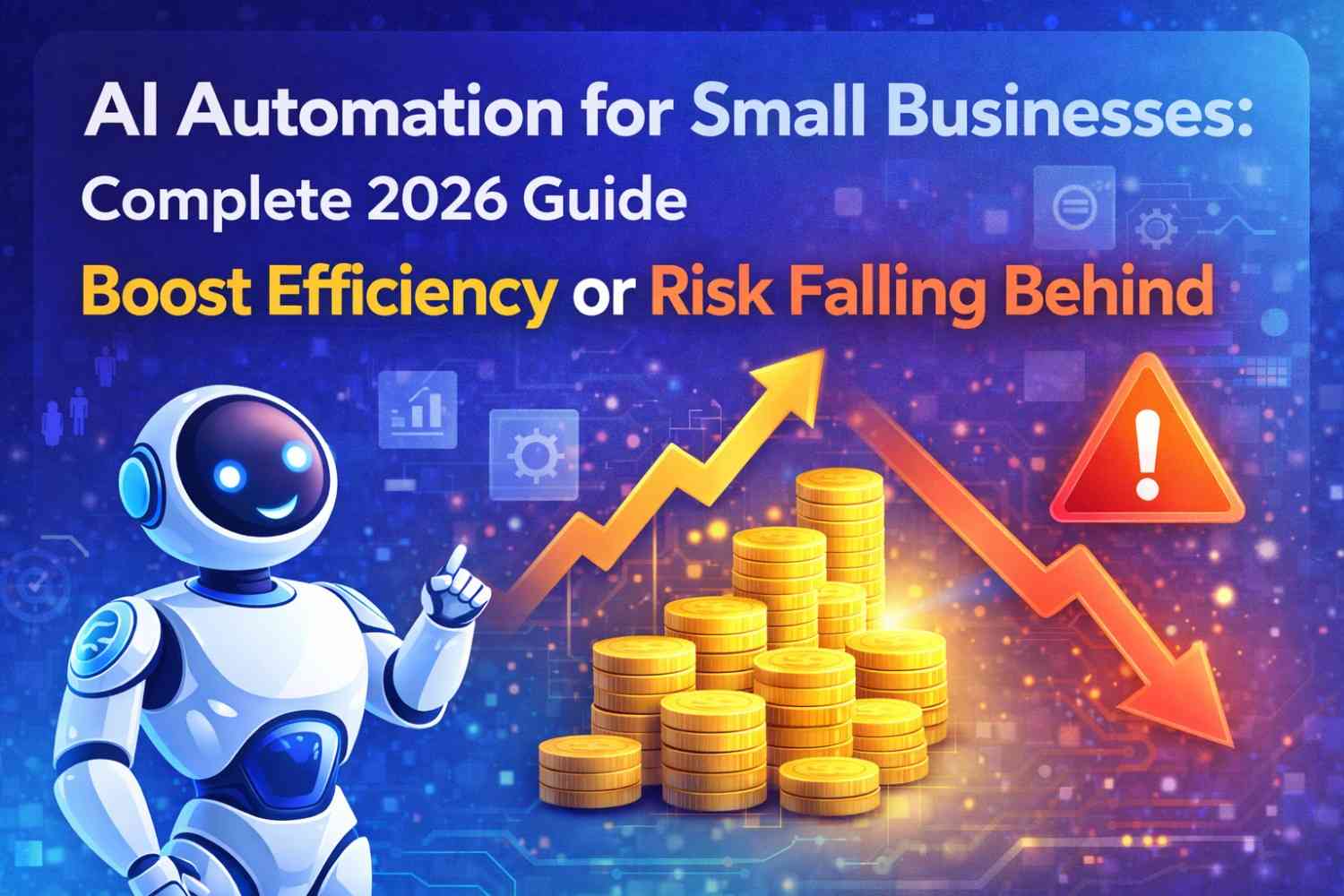
AI automation for small business is no longer a futuristic concept — it is becoming the backbone of modern operations. In 2026, small businesses that embrace AI automation are discovering new levels of efficiency, scalability, and customer satisfaction. However, while the benefits are powerful, there are also risks and challenges that business owners must understand before implementing AI solutions.
One of the biggest advantages of AI automation for small business is operational efficiency. Routine and repetitive tasks such as invoice processing, customer support responses, appointment scheduling, email marketing, and inventory tracking can be handled automatically. This reduces manual errors and frees up valuable time for teams to focus on strategic growth initiatives. When employees spend less time on repetitive tasks, productivity increases significantly.
Another major benefit of AI automation for small business is cost reduction. Automation reduces dependency on large teams for routine operations. Chatbots can manage customer queries 24/7, AI-powered accounting tools can streamline bookkeeping, and automated marketing systems can run targeted campaigns without constant human monitoring. Over time, these efficiencies translate into measurable savings and improved profit margins.
AI automation also improves decision-making. Advanced AI systems analyze customer behavior, purchasing trends, and operational data in real time. Instead of relying on assumptions, small business owners can make informed decisions based on predictive insights. This allows businesses to anticipate demand, optimize pricing strategies, and personalize customer experiences more effectively.
However, despite these advantages, AI automation for small business also comes with potential challenges. One common concern is implementation cost. While AI tools can save money long term, the initial setup, training, and integration expenses may feel overwhelming for small businesses with limited budgets. Choosing the wrong automation platform can also lead to wasted investment.
Another risk is over-automation. When businesses automate too aggressively without maintaining a human touch, customer relationships may suffer. For example, relying entirely on AI chatbots without offering human support options can frustrate customers who need personalized assistance. The key is balancing automation with human interaction to maintain trust and brand loyalty.
Data privacy and security are also critical considerations. AI automation systems rely heavily on customer data to function effectively. Small businesses must ensure they are compliant with data protection regulations and use secure platforms to prevent breaches. A single data incident can damage brand reputation and customer trust.
Employee adaptation is another factor to consider. Introducing AI automation for small business may create resistance among staff who fear job displacement. Clear communication, training programs, and role restructuring can help employees understand that automation is designed to enhance productivity, not replace talent.
Ultimately, AI automation for small business is a strategic tool. When implemented thoughtfully, it can drive growth, improve efficiency, and create competitive advantages. But businesses must approach automation with planning, research, and balance. By understanding both the positive opportunities and potential risks, small businesses can adopt AI automation confidently and sustainably in 2026 and beyond.
Conclusion: Embracing AI Automation for Small Business
In conclusion, AI automation for small business is not just a trend; it’s a necessity for those looking to thrive in a competitive marketplace. By leveraging business process automation tools and AI workflow automation, small businesses can enhance efficiency, reduce costs, and improve customer experiences. As technology continues to advance, embracing these innovations will be essential for sustained growth and success.
For more insights and tips on leveraging AI for your small business, visit AI automation for small business and explore a wide range of resources available at AI automation for small business.
Additionally, you can stay updated on the latest trends in AI and automation by checking reputable sources such as AI automation for small business and AI automation for small business.



Leave a Reply