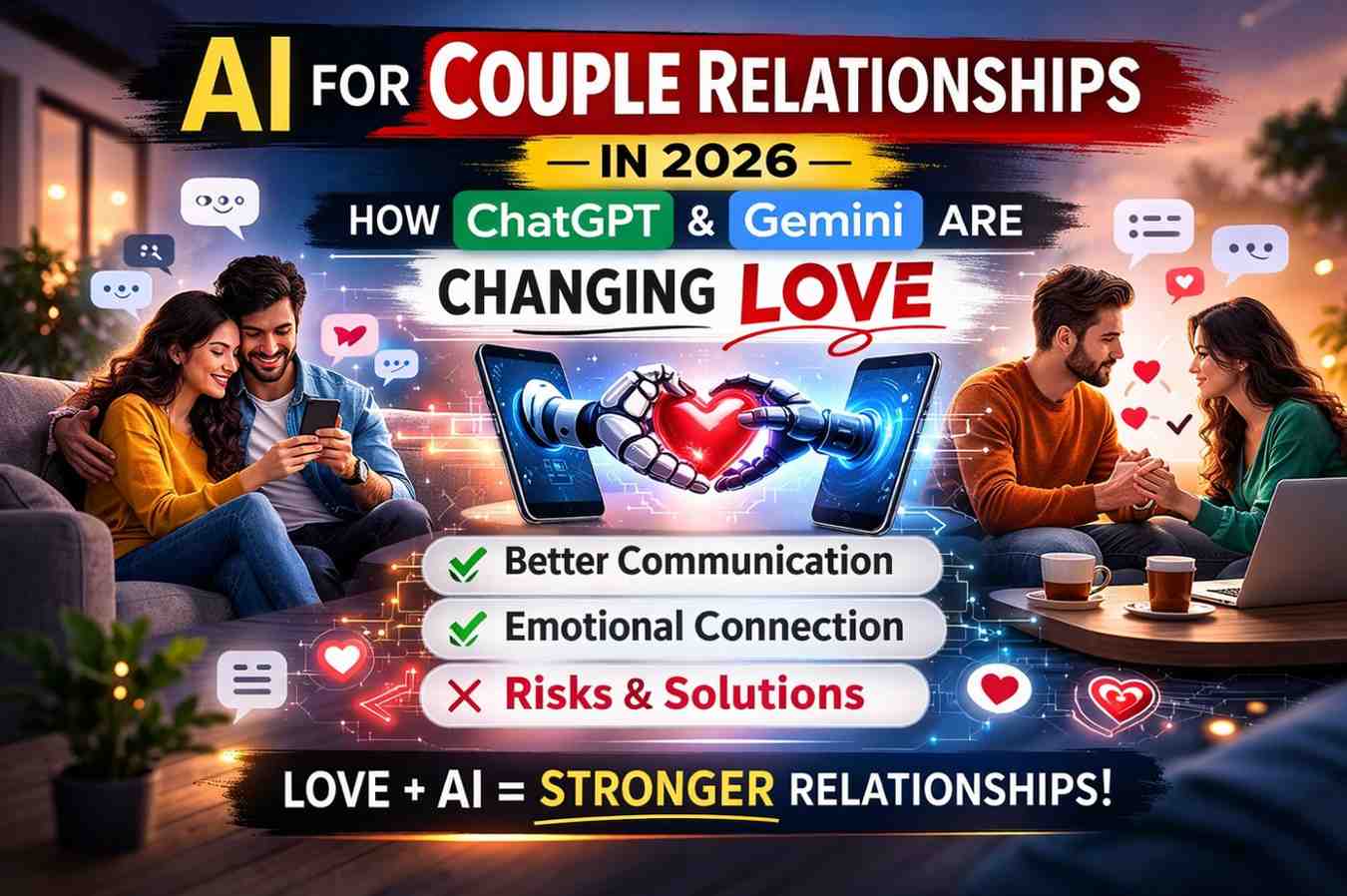
In 2026, AI for Couple Relationships has moved from novelty to everyday toolkit for partners seeking better communication, intimacy, and conflict resolution. Whether couples are exploring automated conversation starters, personalized coaching from ChatGPT-style agents, or multimodal guidance from Gemini-powered companions, AI for couple relationships is reshaping how partners learn, grow, and stay connected. This post walks through nine powerful benefits and six hidden risks you should evaluate before inviting AI into your relationship.
Table of Contents
9 Powerful Benefits of AI for Couple Relationships in 2026
AI for couple relationships now offers practical, evidence-informed support that complements traditional therapy. Below are nine benefits couples report most often when using tools like ChatGPT and Google’s Gemini alongside human support.
- On-demand coaching: Couples can access conversational coaching any hour, helping de-escalate arguments and practice healthier responses in real time.
- Personalized communication prompts: AI analyzes patterns and delivers customized prompts to encourage empathy and clarity, which is particularly useful when awkward topics arise.
- Neutral mediation: An impartial AI can reframe tense exchanges so partners hear each other more clearly without feeling judged.
- Homework and skill-building: Many couples use AI to practice active listening exercises, role-plays, and reflective writing between sessions with a therapist.
- Emotion tracking and trends: By logging moods and events, AI helps couples spot long-term patterns and triggers before they escalate.
- Accessibility and affordability: For couples with limited access to in-person therapy, AI tools provide affordable, scalable help that broadens availability.
- Tailored resources: AI curates articles, exercises, and multimedia content based on a couple’s unique dynamics and learning style.
- Preparation for therapy sessions: Couples use AI to outline concerns and goals beforehand, making sessions with clinicians more focused and efficient.
- Reduced stigma around help-seeking: Interacting with AI for couple relationships can be a lower-barrier way to begin change, helping partners take the first step toward deeper work.
For couples who want a guided introduction to intelligent tools, this AI for couple relationships guide offers practical steps for safe, effective use. Many partners then experiment with conversational agents; if you want to learn more about how major models compare, see this resource on ChatGPT and Gemini for couples.
How AI for Couple Relationships Improves Communication
Communication is the core of relationship health, and several features of AI for couple relationships target it directly. These tools translate vague complaints into actionable needs, suggest wording for difficult conversations, and model empathic responses. AI can also create safe rehearsal spaces: partners practice conversations and receive feedback on tone, pacing, and clarity without fear of hurting the other person’s feelings.
Real-time de-escalation and conflict coaching
When tensions flare, AI agents can suggest a cooling-off script or a brief reflective prompt to lower reactivity. This isn’t a replacement for slow, intentional relationship work, but it prevents many conversations from spiraling into long-term damage.
Structured check-ins and rituals
AI reminders for weekly check-ins, gratitude exercises, or scheduled affection prompts help partners maintain connection during busy or stressful periods. These small rituals, supported by AI, compound into measurable improvements over months.
Privacy, Ethics, and Hidden Risks of ChatGPT and Gemini for Couples
Despite benefits, AI for couple relationships carries non-trivial risks that couples must address proactively. Understanding these hidden pitfalls helps partners make informed decisions about when and how to use conversational agents safely.
1. Data privacy and sensitive disclosures
Conversations about finances, sexual health, or past trauma are highly sensitive. Depending on the platform, data may be logged, analyzed, or used to improve models. Couples should read privacy policies, consider local data protections, and avoid sharing uniquely identifying information when possible.
2. Over-reliance and skill atrophy
Relying too much on AI to mediate or script interactions can stunt a couple’s ability to develop direct communication skills. Use AI as a learning aid rather than a permanent intermediary to avoid weakening the relationship’s human-to-human connection.
3. Misinformation and one-size-fits-all suggestions
Even sophisticated models sometimes produce inaccurate or culturally insensitive advice. Verify AI recommendations against reputable sources or with a licensed clinician. For research on emotional processes, consider reading work on emotional intelligence in relationships.
4. Unbalanced dependency within the relationship
If one partner uses AI more than the other, it can create power imbalances. Transparent agreements about when and how to use AI tools reduce misalignment and maintain equality in decision-making.
5. Ethical boundaries and consent
Using AI to simulate or analyze private conversations without explicit partner consent can violate trust. Set clear boundaries: get mutual agreement before analyzing chat logs, recording sessions, or sharing prompts about the other person.
6. Commercialization and hidden agendas
Some AI products are designed to upsell services or collect engagement data for profit. Be cautious of platforms that promote goods or partner services aggressively; prioritize transparent, non-commercialized options when the goal is relationship health. For alternatives that pair therapy with technology, services that center licensed clinicians are available, such as AI relationship advice offerings that explicitly combine human oversight with AI tools.
Practical Guidelines for Safe Use of AI for Couple Relationships
To benefit from AI while minimizing harm, follow these practical guidelines.
- Discuss and agree: Before using AI together, agree on what topics are acceptable and how insights will be used.
- Limit sensitive inputs: Avoid sharing personal identifiers, financial account numbers, or legal documents with unconstrained models.
- Check sources: When AI provides actionable mental health or medical suggestions, cross-check with a professional.
- Use human oversight: Combine AI-supported exercises with periodic sessions with a licensed therapist to ensure progress and safety.
- Rotate tools: Try different models and methods so you’re not locked into one vendor’s approach or bias.
- Set expiration: If AI mediates a recurring task (like weekly agenda-setting), set dates to review whether the tool remains useful.
Choosing Between ChatGPT and Gemini: What Couples Should Know
Both ChatGPT-style agents and Gemini bring strengths to AI for couple relationships. ChatGPT is often praised for conversational nuance and a large ecosystem of third-party apps. Gemini emphasizes multimodal inputs — combining text, images, and more — which can support richer shared activities like revisiting photos or co-creating vision boards. Whichever you choose, prioritize models that allow local privacy settings, clear data controls, and export features so you can keep or delete histories as needed.
When to prefer human professionals
AI is a supplement, not a substitute, for clinical diagnosis and treatment. If a relationship faces abuse, severe mental health issues, or legal entanglements, seek qualified human professionals immediately. AI can prepare you for therapy, but it should not replace emergency interventions or safety planning.
Future Directions for AI for Couple Relationships
Looking ahead, AI for couple relationships will continue to integrate better personalization, explainability, and clinician partnerships. Expect tools that are more transparent about their confidence levels, that allow shared control between partners, and that are developed with direct input from relationship researchers and therapists. When vendors include safety-by-design features, couples can more confidently experiment while protecting privacy and autonomy.
If you’re curious about beginner-friendly resources or want a step-by-step path for integrating AI into your relationship, the AI for couple relationships guide is a practical starting point. For couples considering specific models, explore how experienced users combine ChatGPT and Gemini in practice via articles and community forums to see examples and cautionary tales, and consult professional platforms offering supervised integration like the ones that provide AI relationship advice.
AI for couple relationships is a rapidly evolving toolbox: its benefits are powerful when used thoughtfully, and its risks are manageable with clear agreements and professional input. As you consider adding AI to your relationship, balance curiosity with caution, prioritize consent and privacy, and use AI to enhance—not replace—the human work of love and repair.
Conclusion: AI for couple relationships can sharpen communication, increase accessibility to support, and offer new avenues for growth, but it requires informed, joint decisions to avoid hidden risks and ensure it strengthens rather than undermines your partnership.



Leave a Reply