Meta AI Ads are reshaping how advertisers scale performance and control costs, but using them effectively takes more than flipping automation on. Whether you’re a seasoned media buyer or managing a growing small-business budget, understanding the practical wins and the common traps around meta ai ads will determine whether your campaigns multiply profits or quietly burn cash.
Table of Contents
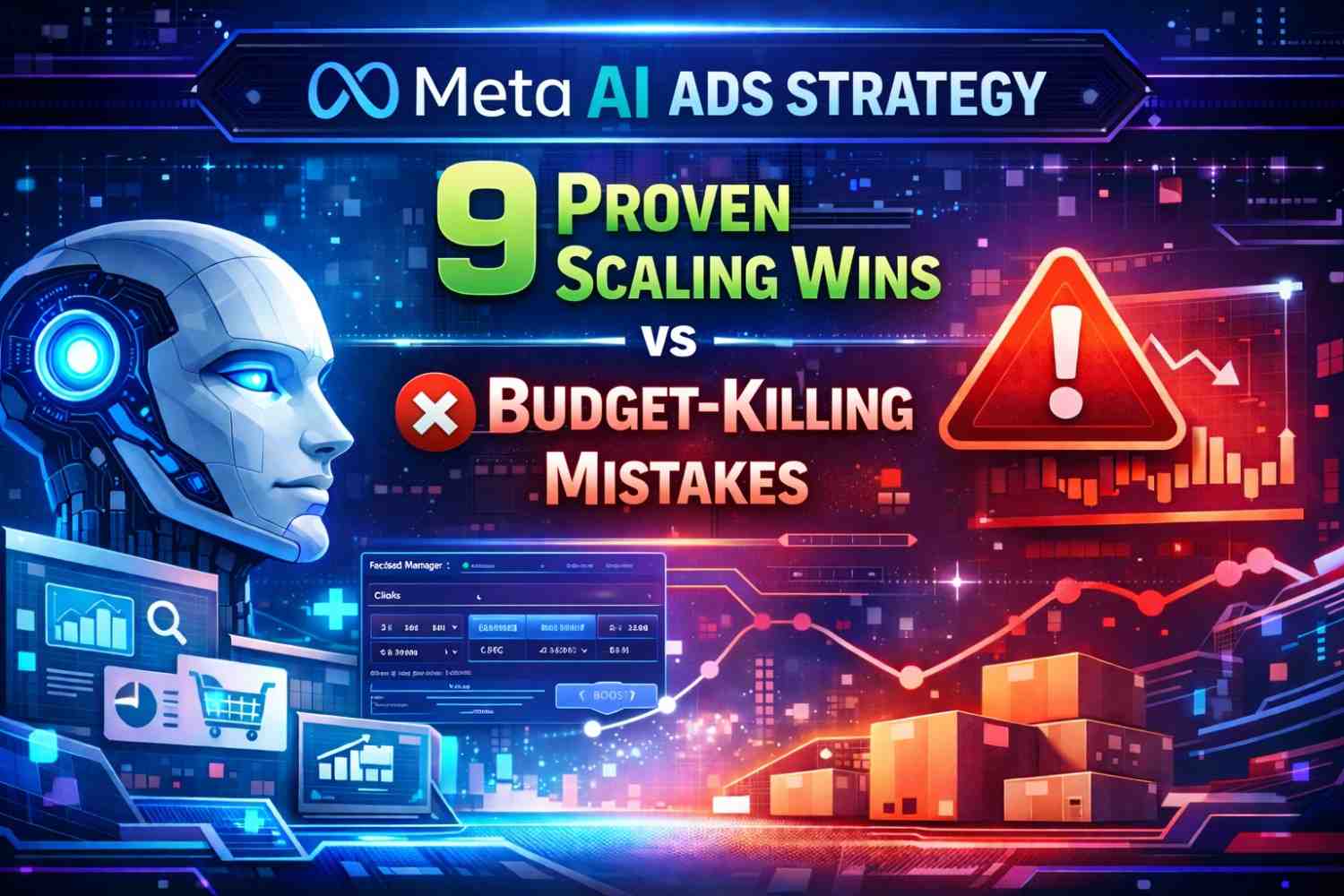
Meta AI Ads: 9 Proven Scaling Wins
When you get meta ai ads right, the platform’s automation can unlock efficiencies and growth that manual tactics struggle to match. Below are nine scaling wins that consistently deliver when combined with disciplined data practices and clear objectives.
1. Start with Clear Conversion Events
Define the primary conversion you care about before handing control to meta ai ads. Whether it’s purchases, leads, or signups, the algorithm performs best when it optimizes toward a single, well-instrumented action. Clean events reduce noise and help automated bidding converge faster.
2. Use Broad Audiences with Strategic Constraints
Meta AI thrives on learning from broader audiences, so favor broader targeting layers while using placement and creative constraints to keep relevance high. Allowing the system to discover pockets of value often scales better than tight manual segments.
3. Feed High-Quality Creative Variants
Provide multiple creative formats and messaging angles to meta ai ads so the algorithm can match creative to audience context. Use short videos, carousel assets, and alternative hooks—automation pairs learnings from creative signals quickly, improving ROAS over time.
4. Invest in High-Value Conversion Data
Quality of conversion data—accurate tracking, deduped events, and a clean purchase funnel—matters more than volume. If your data pipeline is noisy, meta ai ads will optimize to flawed signals. Prioritize event hygiene before budget increases.
5. Gradual Budget Ramp with Learning Windows
Scale budgets incrementally instead of sudden 3–4x increases. Each budget change triggers a learning window for meta ai ads; moderate ramps preserve algorithmic efficiency and stabilize cost per conversion as the system retrains.
6. Leverage Advantage+ and Automated Placements
Use Meta’s automated placement and Advantage+ options to let the system choose optimal surfaces. While you should test constraints, too many manual placement rules limit the discovery power of meta ai ads and often reduce overall performance.
7. Combine Broad Top-of-Funnel with Smart Retargeting
Pair broad prospecting campaigns run by meta ai ads with tailored retargeting sequences. The AI can find new users at scale, and custom retargeting creatives convert those users more efficiently, lowering overall acquisition costs.
8. Tie Budgets to Predictable LTV Metrics
When scaling with meta ai ads, measure success against customer lifetime value, not just first-touch CPA. Allocate budget to campaigns that reliably deliver positive long-term economics rather than short-term efficiencies.
9. Regular but Minimal Manual Overrides
Intervene with manual changes only when performance is predictably deteriorating or when new product launches demand different KPIs. Over-managing meta ai ads can destabilize learned behaviors; set guardrails, not constant edits.
Meta AI Ads: 6 Budget-Killing Mistakes
Even the best automation fails when basics are ignored. Here are six common mistakes that turn meta ai ads from growth engines into budget sinks.
1. Optimizing for the Wrong Event
Choosing a low-intent or proxy event causes meta ai ads to pursue cheap wins that don’t drive revenue. Always prioritize the event that aligns with your business objective—e.g., completed purchase over add-to-cart—so the algorithm optimizes for real value.
2. Too Many Manual Restrictions
Excessive placement or audience restrictions starve meta ai ads of the data needed to learn. Micro-managing placements or excluding large swaths of inventory will often increase CPA and reduce scale.
3. Changing Targets During Learning
Switching primary KPIs or frequently changing conversion windows interrupts the learning cycle. If you must test a new objective, pause or start a new campaign instead of editing in-flight goals.
4. Ignoring Creative Fatigue
Delivering the same creative for long stretches forces meta ai ads to exhaust its available performance. Rotate creatives, refresh hooks, and introduce seasonal messaging to keep CPMs and engagement healthy.
5. Neglecting Attribution and Overlap
Overlapping audiences and poor attribution settings create internal competition and inflated CPAs. Use account structure to minimize overlap, and verify attribution windows match your sales cycle so meta ai ads optimize appropriately.
6. Blind Faith Without Cross-Platform Comparison
Relying solely on one platform’s automation can hide opportunities elsewhere. Compare results from meta ai ads to other systems—like the Google Ads AI system—to ensure you’re allocating budget where incremental returns are highest.
Measurement, Testing, and Structure for Meta AI Ads
Successful scaling requires a measurement framework and campaign structure that complement automation. Meta ai ads respond best when you treat measurement as an ongoing discipline rather than a one-time setup.
Set Clear, Incremental Tests
Run controlled experiments: change only one variable at a time (creative, audience breadth, or bid strategy). Meta AI learns faster with clear signals; clean tests reduce interpretive ambiguity and accelerate learning.
Account Structure That Reduces Overlap
Organize accounts into prospecting, mid-funnel, and retention campaigns. This reduces audience overlap and lets meta ai ads optimize within discrete user journeys rather than competing against your own line items.
Use Predictive LTV and Value Optimization
Value-based bidding aligned to predicted customer value lets meta ai ads pursue higher-margin users. When feasible, feed predicted LTV into campaigns to shift emphasis from cheap conversions to valuable customers.
Practical Playbook: Quick Steps to Start Scaling Today
Apply this short checklist to move from experimentation to scale with meta ai ads without blowing budget:
- Instrument one clean, revenue-aligned conversion and validate data flows.
- Launch a broad prospecting campaign with multiple creative variants and automated placements.
- Set a modest budget ramp plan (20–30% increments every 3–5 days) to respect learning windows.
- Pair broad reach with segmented retargeting sequences and personalized creatives.
- Monitor LTV and adjust allocations away from campaigns with poor long-term metrics.
For teams exploring how AI can expand revenue streams beyond advertising, resources like make money with AI tools and AI income ideas offer practical ways to diversify earnings while you scale ad performance. Additionally, if you manage campaigns on multiple ecosystems, familiarize yourself with the Meta advertising platform features and test cross-traffic against other AI-driven systems to find the best fit for your business.
Wrapping Up: Balancing Automation and Oversight for Meta AI Ads
Meta ai ads can be a potent lever for growth when you combine automation with disciplined measurement, progressive budget ramps, and creative refresh cycles. Avoid the six common mistakes—wrong event optimization, over-restriction, and ignoring attribution—and instead pursue the nine scaling wins outlined above. With the right structure, meta ai ads will scale your best customers, not just your spend.
Conclusion: Meta ai ads are not a set-and-forget tool. They demand thoughtful setup, ongoing testing, and alignment to long-term value. Follow the playbook here to increase returns while minimizing costly budget leaks.




Leave a Reply