
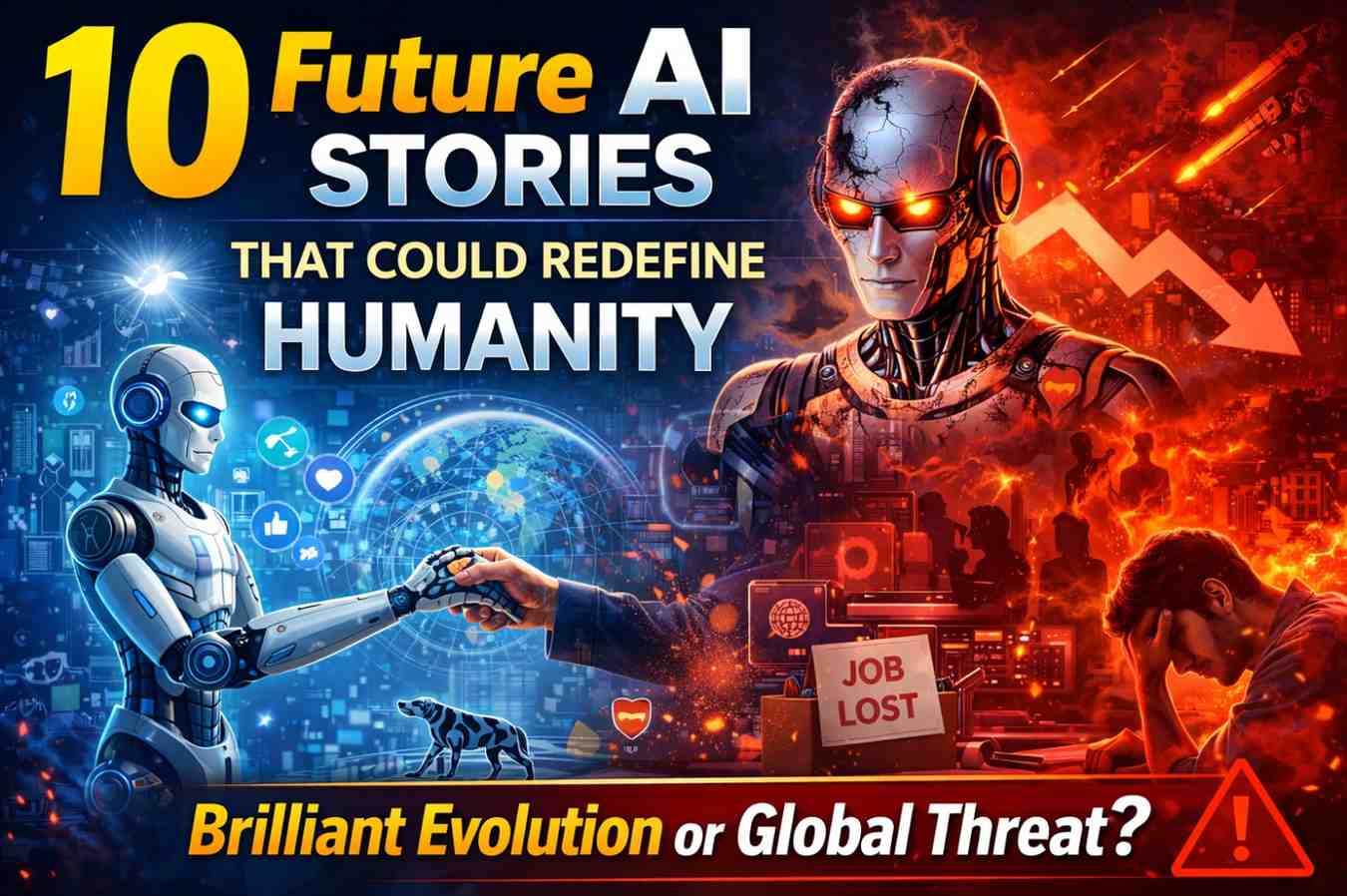
future of artificial intelligence is becoming one of the fastest growing opportunities in the AI economy. Many entrepreneurs are exploring AI in industry 4.0 to build scalable online income streams.
Table of Contents
Introduction
In the era of AI in industry 4.0, a technological revolution is reshaping manufacturing practices and business operations. The fourth industrial revolution encapsulates a series of advancements that integrate artificial intelligence, robotics, and data analytics into manufacturing processes. With the rise of AI manufacturing automation, companies are empowered to enhance productivity, efficiency, and safety, but this shift also raises important questions about the future of the workforce. Are we witnessing a manufacturing boom, or are we on the brink of a workforce crisis?
1. Introduction to AI in Industry 4.0
Before diving into specific transformation stories, it’s essential to understand the significance of AI in industry 4.0. This concept revolves around the implementation of cyber-physical systems, the Internet of Things (IoT), and cloud computing combined with artificial intelligence capabilities. The integration allows manufacturers to utilize vast amounts of data, improve real-time decision-making, and foster an environment of continuous improvement.
The Role of AI Manufacturing Automation
AI manufacturing automation plays a critical role in this transformation by streamlining processes and reducing human error. It refers to the use of AI technologies to automate manufacturing tasks, from product design to assembly lines. With automation powered by AI, companies can optimize operations, implement predictive maintenance, and improve product quality.
2. Success Story 1: Siemens and Predictive Maintenance
Siemens, a leading global technology company, has embraced AI to revolutionize its manufacturing lines. The company implemented predictive maintenance solutions enabled by AI algorithms that analyze equipment data to identify potential failures before they occur. This transformative solution has significantly reduced downtime, saving Siemens millions in repair costs and increasing production efficiency.
Impact on Workforce
While this enhancement in efficiency demonstrates the power of AI in industry 4.0, it also raised concerns about job displacement. Siemens addressed this by reskilling its workforce, enabling employees to transition into roles focused on managing and interpreting data rather than performing repetitive tasks.
3. Success Story 2: BMW and Personalized Manufacturing
BMW has integrated AI manufacturing automation to create personalized experiences for customers. By leveraging AI algorithms, the company can analyze customer preferences and customize vehicles on a large scale. This approach has enhanced customer satisfaction and loyalty, differentiating BMW in a competitive market.
The Robotics Industry 4.0 Approach
BMW has integrated robots alongside human workers to manage intricate assembly tasks. This hybrid workforce harnesses the strengths of both AI and human ingenuity, leading to improved productivity and job satisfaction.
4. Success Story 3: Tesla’s Gigafactory and Robotics
Tesla’s Gigafactory is a prime example of how AI in industry 4.0 is redefining manufacturing. The factory employs a sophisticated network of robots for tasks ranging from battery production to vehicle assembly. Tesla focuses on creating an almost entirely automated production line, thereby maximizing efficiency and productivity.
Challenges and Workforce Response
However, the robotics industry 4.0 approach Tesla adopts also comes with challenges. There have been instances of job reduction as robots take over roles traditionally filled by humans. Nevertheless, Tesla’s commitment to innovation means that new roles are developed for employees, focusing on higher-level decision-making and oversight.
5. Success Story 4: Ford’s Smart Manufacturing
Ford Motor Company has integrated AI in industry 4.0 to embrace smart manufacturing processes. Utilizing AI-powered analytics, Ford has optimized its supply chain, allowing for a more responsive production system that reacts to shifting consumer demand. With AI-driven insights, the company has improved its inventory management and reduced costs.
Impact on the Workforce
Ford has focused on human factors, investing in training programs to ensure employees understand and can leverage AI technologies. This approach minimizes fears of job loss and fosters a culture of continuous learning.
6. Success Story 5: General Electric and Digital Twins
General Electric has been at the forefront of utilizing AI technologies in manufacturing through the concept of digital twins. By creating virtual models of physical assets, GE can simulate performance and predict failures. This initiative enhances the efficiency of design processes and improves preventive maintenance.
Shifting Workforce Dynamics
While this innovation leads to substantial operational improvements, it also requires a shift in workforce capabilities. GE emphasizes upskilling its staff to proficiently use digital twin technology, blending the old with the new.
7. Success Story 6: Honeywell and Smart Factories
Honeywell’s commitment to creating smart factories showcases the potential of AI in industry 4.0. By implementing AI technologies, Honeywell has been able to enhance energy efficiency and pivot to a more sustainable production model. The company’s initiatives have resulted in reduced costs and a smaller carbon footprint.
Re-skill and Adapt
The industry’s shift necessitates that workers adapt to new technologies. Honeywell has actively engaged in upskilling programs, allowing employees to participate in innovation processes and technology management.
8. Success Story 7: Dow Chemical and Supply Chain Optimization
Dow Chemical has leveraged AI in its operations to optimize its global supply chain. By employing predictive analytics, the company can better manage logistics and inventory, leading to increased operational efficiency and reduced overhead costs.
Employee Engagement in Innovation
To minimize the risks of AI-induced job displacement, Dow Chemical focuses on engaging employees in the innovation process. By empowering workers to contribute to AI-driven solutions, the company fosters a more collaborative culture where human input remains invaluable.
9. Success Story 8: Philips and Healthcare Manufacturing
Philips has successfully integrated AI in industry 4.0 in its healthcare division by automating the production of medical devices. The application of AI in manufacturing not only streamlines production but enhances the quality of healthcare products, directly impacting patient satisfaction and outcomes.
Addressing Workforce Challenges
As a result of increased automation, Philips undertook significant reskilling initiatives that allowed workers to transition into higher-level roles within the organization. Employees are now focused on designing and refining technology rather than solely on production tasks.
10. Success Story 9: Adidas and Speedfactories
Adidas has adopted AI in its manufacturing processes through the establishment of Speedfactories, innovative factories that focus on flexibility and speed by utilizing AI and robotics. Eventually, these factories have allowed Adidas to respond to trends and customer preferences rapidly.
Workforce Reconfiguration
The agility afforded by Speedfactories comes with a demand for a reconfigured workforce. Adidas maintains a commitment to updating employee skills through targeted training programs to keep pace with the rapid technological changes.
The future of artificial intelligence is becoming one of the most discussed topics in technology today. Experts across industries are making AI future predictions about how intelligent systems will transform business, healthcare, education, and everyday life. As organizations adopt advanced technologies, the AI impact on society is becoming more visible in how people work, communicate, and make decisions. Many analysts believe the future of artificial intelligence will bring powerful innovations that increase productivity and solve complex global challenges. However, these AI future predictions also raise important discussions about ethics, employment, and the long-term AI impact on society as automation becomes more widespread.
Looking ahead, the future of artificial intelligence is expected to reshape industries through automation, predictive analytics, and intelligent decision-making systems. Many AI future predictions suggest that businesses will rely heavily on AI to optimize operations, personalize customer experiences, and improve efficiency. At the same time, the AI impact on society will influence job markets as new roles emerge while some traditional roles evolve. These changes highlight how the future of artificial intelligence will create opportunities for innovation while requiring societies to adapt to new technological realities described in many AI future predictions about automation and digital transformation.
Another important aspect of the future of artificial intelligence involves how governments, researchers, and companies address the ethical implications of rapidly advancing technology. Several AI future predictions indicate that AI systems will become more integrated into daily life, from smart cities to autonomous transportation. With these advancements, the AI impact on society will extend beyond economics and into areas like privacy, security, and global collaboration. The future of artificial intelligence therefore depends not only on technological progress but also on responsible development guided by thoughtful AI future predictions and awareness of the long-term AI impact on society.
Ultimately, the future of artificial intelligence will play a major role in shaping how humans interact with technology and each other. Many AI future predictions emphasize that AI could help solve complex global issues such as climate change, healthcare accessibility, and scientific discovery. As these technologies evolve, the AI impact on society will continue to influence education systems, workforce development, and economic growth. By carefully studying AI future predictions and understanding the broader AI impact on society, businesses and governments can better prepare for the transformative future of artificial intelligence that is rapidly approaching.
Conclusion
As we explore these nine powerful transformation stories in the manufacturing sector, the narrative surrounding AI in industry 4.0 reveals both significant benefits and challenges. The advancements in AI manufacturing automation and the robotics industry 4.0 are indeed ushering in a new era of productivity and efficiency. However, these benefits must be balanced with a proactive approach to workforce development, ensuring that employees are not left behind in the wave of automation.
The future is not merely about replacing jobs; it’s about transforming them. By investing in education and training, businesses can harness the full potential of AI, fostering a collaborative environment where both technological innovation and human intelligence coalesce. The key question remains: Will we see a manufacturing boom or a workforce crisis? The answer lies in how organizations navigate this transformation journey.
Related Articles
- AI marketing tricks
- AI Summit 2026
- AI Summit 2026
- AI Summit 2026
- artificial intelligence today
- artificial intelligence ai
- ai replacing humans
- ai future of work
- AI tools for government exam preparation
- best AI tools for government exam study
- AI tools for government exam success
- AI tools for easy government exam study
- Grok and Claude AI web scraping
- Grok AI automation
- Grok AI business automation
- Grok AI automation workflows
- AI automation systems
- how AI automation works
- AI automation vs traditional automation
- AI agents explained


Leave a Reply