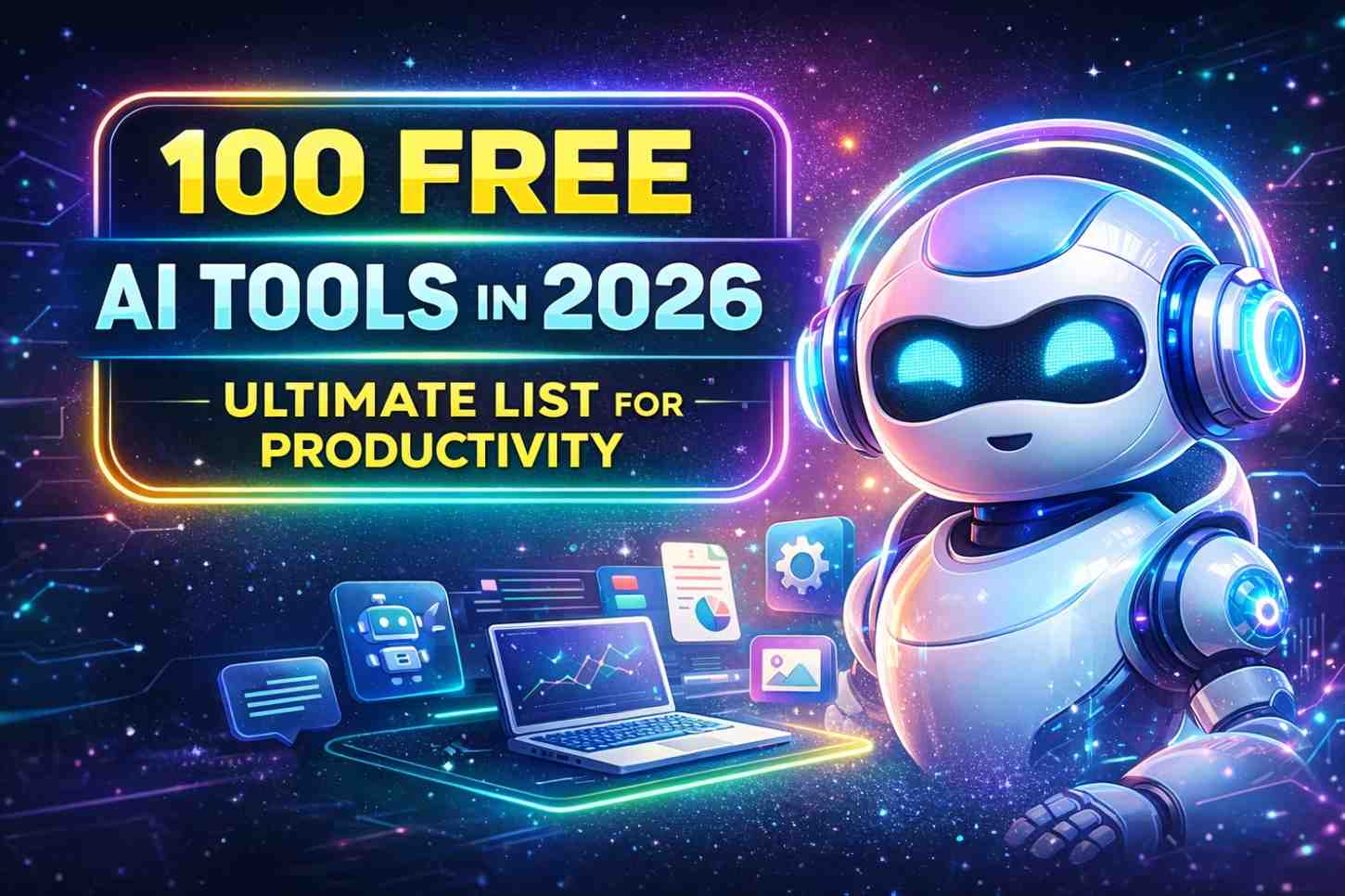
AI tools is becoming one of the fastest growing opportunities in the AI economy. Many entrepreneurs are exploring AI tools to build scalable online income streams.
15 Powerful AI Tools That Can Replace Hours of Work — Productivity Boost or Job Risk?
In today’s fast-paced world, AI tools have emerged as game-changers in enhancing productivity and efficiency across various industries. These tools are designed to automate tedious tasks, analyze vast amounts of data, and even assist in creative endeavors, ultimately allowing professionals to redirect their focus towards more complex and strategic activities. However, with such powerful AI productivity tools comes a pressing question: Are these innovations a boon for productivity, or do they pose a risk to job security? In this article, we will explore 15 of the most impactful AI tools available today and their implications on productivity and employment.
1. Chatbots for Customer Service
Chatbots are among the most popular AI tools that organizations deploy to manage customer service queries efficiently. These bots can handle multiple customer inquiries simultaneously, providing instant answers to common questions. Tools like Intercom and Drift not only enhance customer experience but also save businesses countless hours of work by reducing the load on human agents.
Benefits of Chatbots
- 24/7 Availability: Chatbots can operate continuously, assisting customers in different time zones.
- Cost-Effective: Reduces the need for a large customer service team.
- Data Collection: They can gather useful data on customer preferences and behaviors for future marketing efforts.
2. AI-Powered Writing Assistants
Content creation can be time-consuming, but tools like Grammarly and Jasper are transforming how writers produce text. These AI productivity tools offer suggestions for grammar, tone, and style, allowing users to enhance their writing quality while saving time.
Enhancing Writing Efficiency
- Grammar Checks: Instant feedback on grammatical errors.
- Style Suggestions: Helps in adjusting content for different audiences.
- Content Generation: Jasper can create entire articles or marketing copy based on prompts.
3. Image and Video Editing Automation
The creative industry has historically required extensive manual labor for image and video editing. However, AI tools like Canva and Adobe Photoshop’s Sensei feature can simplify this process dramatically. These tools allow users to perform complex edits or create stunning visuals without extensive knowledge.
Streamlining Creative Work
- Template and Style Options: Offers users pre-set templates to start from.
- One-Click Editing: Automated adjustments for lighting and color balance.
- Smart Tagging: Helps in organizing and finding visual assets more easily.
4. AI for Data Analysis
Data-driven decision-making is critical for businesses today. Tools like Tableau and Google Analytics employ machine learning algorithms to analyze data faster and more accurately. These AI automation tools can identify trends and provide actionable insights that would have otherwise taken teams weeks to uncover.
Benefits of AI in Data Analysis
- Speed: Rapid data processing and real-time analytics.
- Predictive Analytics: Ability to forecast future trends.
- User-Friendly Interfaces: Enables non-technical users to interpret complex data.
5. Voice Recognition and Transcription Tools
Transcribing meetings or interviews can be a daunting task. However, AI tools such as Otter.ai and Google Speech-to-Text can convert spoken language into written text almost instantaneously, vastly improving productivity.
Making Communication More Efficient
- High Accuracy: Advanced algorithms enhance transcription accuracy.
- Time-Saving: No need to spend hours on manual transcription.
- Searchable Text: Text generated is easily searchable for future references.
6. Project Management Software with AI
AI-powered project management tools, like Trello and Monday.com, use automation to streamline project workflows. These tools can predict project timelines, allocate resources, and even automate notifications to team members when deadlines are approaching.
Improving Project Efficiency
- Task Automation: Allows users to automate repetitive tasks.
- Real-Time Collaboration: Facilitates effortless communication between team members.
- Resource Management: AI assists in optimizing resource allocation efficiently.
7. AI for HR Management
Recruitment and employee management are infinitely more efficient with AI tools such as Workday and BambooHR. These solutions help HR teams streamline talent acquisition processes, from sorting resumes to scheduling interviews.
Benefits for Human Resources
- Enhanced Screening: AI can quickly sort through thousands of applications to find the best candidates.
- Employee Retention: Predictive analytics can identify employees likely to leave.
- Time-Saving Processes: Automates repetitive HR tasks, freeing hours for strategic planning.
8. Social Media Management Tools
Platforms like Buffer and Hootsuite leverage AI to create, schedule, and analyze social media posts effectively. These AI productivity tools not only save time but also improve social media strategy by providing insights into audience engagement.
Streamlining Social Media Efforts
- Content Scheduling: Lets users plan their posting schedule in advance.
- Analytics Reporting: Provides insights into post-performance.
- Audience Engagement: Helps in monitoring comments and mentions effectively.
9. Virtual Assistants for Calendar Management
Virtual assistants like Calendly and Google Assistant help manage appointments, set reminders, and even organize meetings. These AI automation tools allow users to focus on more significant projects while automating their calendar workflow.
Benefits of Virtual Assistants
- Efficient Scheduling: Minimizes back-and-forth communication about availability.
- Integrated Reminders: Send automatic reminders for meetings.
- Time Saving: Reduces time spent managing calendars and appointments.
10. AI-Driven Marketing Analysis
Marketing teams can leverage AI tools like HubSpot and Marketo to analyze consumer behavior, optimize campaigns, and improve targeting effectiveness. These powerful solutions can significantly reduce the time required to develop and launch marketing strategies.
Optimizing Marketing Efforts
- Behavior Analysis: Offers insights into consumer behavior for better targeting.
- Campaign Automation: Helps set up automated marketing campaigns.
- Personalization: Provides recommendations for personalized marketing content.
11. E-Learning AI Tools
With the rise of remote learning, platforms like Coursera and Khan Academy are using AI to customize learning paths for students, making education more accessible and tailored. These AI productivity tools help educators save time developing curriculum material by offering AI-generated recommendations.
Enhancing Educational Experiences
- Personalized Learning: AI tailors courses to individual learning speeds and styles.
- Real-Time Feedback: Provides immediate feedback to learners.
- Resource Recommendations: Suggests materials based on learning progress.
12. Email Management Systems
AI tools like Sanebox and Google’s Smart Compose help manage email clutter by automatically organizing emails into categories and suggesting responses. This can significantly enhance productivity by allowing users to focus on important correspondence.
Improving Email Productivity
- Auto-Categorization: Sorts incoming emails into relevant folders.
- Response Suggestions: Offers pre-written replies to save time.
- Schedule Reminders: Sends reminders for follow-ups.
13. AI Tools for Coding
Software development productivity has been revolutionized by AI tools such as GitHub Copilot and TabNine. These tools assist developers by suggesting code snippets and providing debugging assistance, drastically reducing the time spent on coding tasks.
Advantages of AI in Coding
- Code Suggestions: Provides instant suggestions as developers type.
- Syntax Checks: Detects errors in real-time.
- Project Structuring: Helps developers structure projects more efficiently.
14. Customer Relationship Management (CRM) Software
AI-enhanced CRM platforms, such as Salesforce and Zoho, automate customer interactions and help manage relationships more effectively. These AI automation tools enable businesses to understand their customers better and improve service delivery.
Enhancing CRM Efficiency
- Lead Scoring: AI predicts which leads are more likely to convert.
- Customer Insights: Provides data on customer preferences and history.
- Automated Follow-Ups: Sets reminders for follow-up actions.
15. AI Tools for Health Monitoring
The healthcare industry is leveraging AI technology through tools like IBM Watson and Fitbit for health monitoring and diagnostics. These applications not only streamline patient care but also enhance the quality of healthcare services.
Revolutionizing Healthcare
- Data Analysis for Diagnostics: Uses AI to analyze medical records and enhance diagnostic accuracy.
- Patient Monitoring: Enables real-time health tracking and alerts.
- Resource Allocation: Optimizes hospital resource management based on predictive analytics.
Conclusion: Productivity Boost or Job Risk?
The rise of AI tools has undoubtedly introduced significant productivity benefits across multiple sectors. From automating mundane tasks to enabling smarter decision-making and efficient workflows, the advantages are clear. However, the rapid evolution of these technologies also brings concerns about job displacement and the future workforce landscape. While AI productivity tools offer many benefits, they also raise questions about the roles that may be rendered obsolete by automation.
As we move forward, it is critical for professionals and organizations to embrace these innovations while also preparing for the transformation of the job market. Upskilling and continuous learning will be essential in ensuring that workers complement AI tools rather than compete with them. Thus, while AI presents a risk to certain job functions, it also opens up new opportunities for enhanced roles focused on creativity, strategy, and human interaction.
In summary, embracing AI automation tools can lead to unmatched productivity gains, but it is essential to also consider the implications for job security. As we navigate this landscape, a proactive approach to skill development will help ensure that the workforce stays relevant and ready to harness the potential of AI.
Related Articles
- AI marketing tricks
- AI Summit 2026
- AI Summit 2026
- AI Summit 2026
- artificial intelligence today
- artificial intelligence ai
- ai replacing humans
- ai future of work
- AI tools for government exam preparation
- best AI tools for government exam study
- AI tools for government exam success
- AI tools for easy government exam study
- Grok and Claude AI web scraping
- Grok AI automation
- Grok AI business automation
- Grok AI automation workflows
- AI automation systems
- how AI automation works
- AI automation vs traditional automation
- AI agents explained


Leave a Reply