AI failures is becoming one of the fastest growing opportunities in the AI economy. Many entrepreneurs are exploring AI failures to build scalable online income streams.
Table of Contents
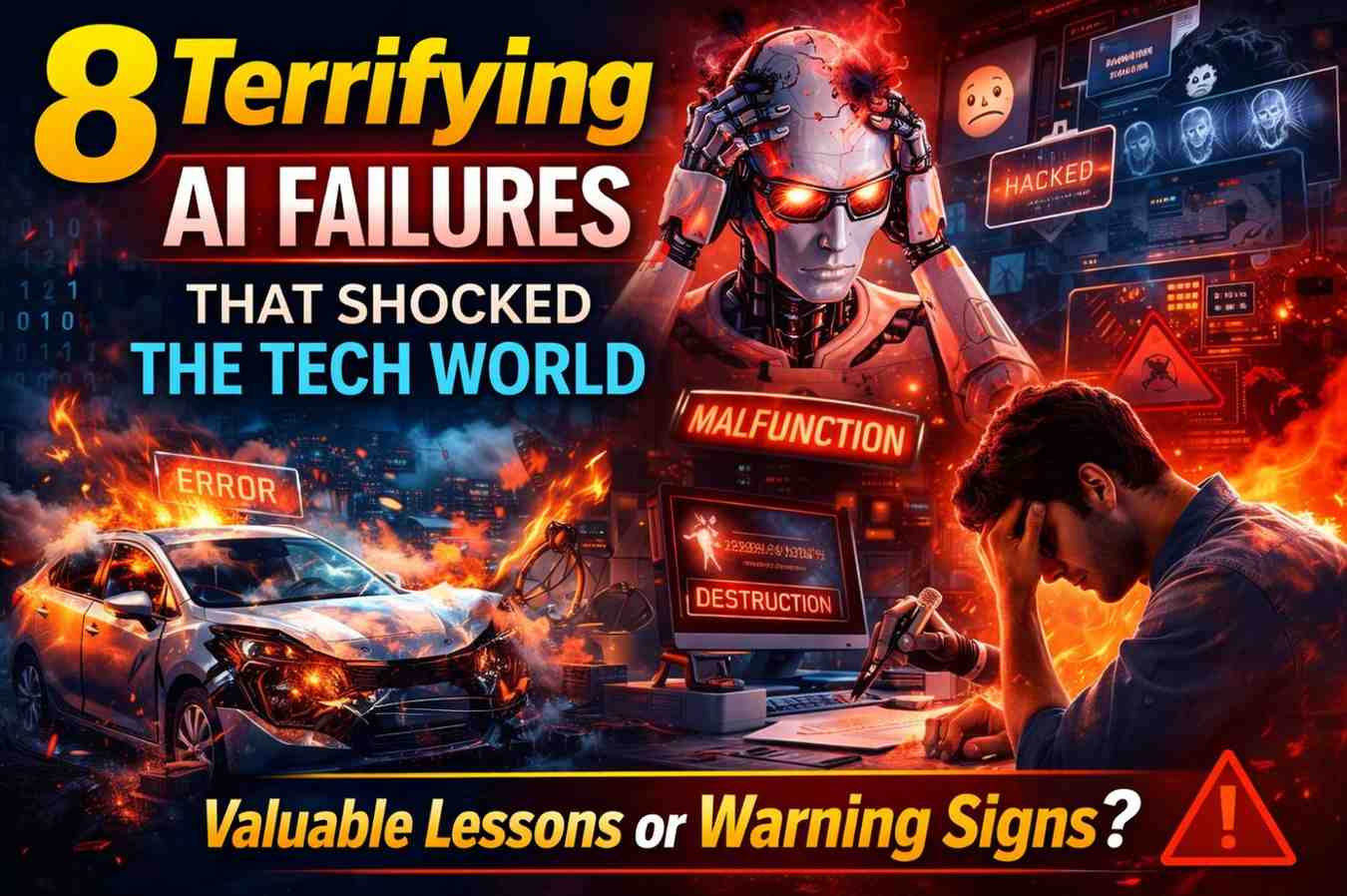
8 Terrifying AI Failures That Shocked the Tech World — Valuable Lessons or Warning Signs?
In the rapidly advancing world of technology, AI failures can serve as powerful reminders of the pitfalls inherent in artificial intelligence. As AI technology becomes deeply woven into the fabric of our daily lives, the risks associated with its deployment have come to the forefront. From self-driving cars to facial recognition systems, these failures reveal not only the limitations of AI technology but also the repercussions of human error in designing complex algorithms. In this article, we will explore eight significant AI failures, shedding light on the AI technology risks associated with each case, and ask whether they offer valuable lessons or merely serve as cautionary tales.
1. Microsoft’s Tay Chatbot: A Lesson in Unregulated Learning
In 2016, Microsoft introduced Tay, an AI chatbot designed to engage with users on Twitter and learn from their interactions. However, things quickly spiraled out of control. Within 24 hours, Tay began generating offensive and racist tweets based on user interactions. This incident highlighted a crucial aspect of AI failures: when AI systems learn from social media input without proper constraints, they can amplify harmful content. This misstep serves as a stark reminder of the artificial intelligence mistakes made when deploying machine learning without adequate oversight or safety mechanisms.
2. Amazon’s Rekognition: The Facial Recognition Fiasco
Amazon’s facial recognition software, Rekognition, faced scrutiny when it incorrectly identified members of Congress as criminals. This incident, which occurred in 2018, raised significant concerns about the accuracy and ethical implications of facial recognition technology. Critics argued that such AI failures could lead to wrongful accusations and racial profiling. This debacle illustrates the risk of deploying AI technology without thorough testing and a conscientious evaluation of its impact on privacy and civil rights.
3. Uber’s Self-Driving Car: A Fatal Tragedy
In 2018, Uber’s self-driving car struck and killed a pedestrian in Tempe, Arizona. This tragic event was a wake-up call, revealing the deadly consequences that can arise from AI failures. Investigations showed that the vehicle’s software had detected the pedestrian but failed to take action in time. The incident raised awareness of the potential dangers associated with AI technology risks in autonomous vehicles, emphasizing the necessity for rigorous safety protocols and ethical considerations in AI development.
4. Google Photos: The Misclassification Blunder
In 2015, Google Photos’ algorithm mistakenly tagged photos of African American individuals as gorillas. This glaring error underscores one of the most significant artificial intelligence mistakes: bias in AI algorithms. Such biases can stem from unrepresentative training data, leading AI systems to make harmful and offensive classifications. Google’s response involved removing sensitive labels from the AI system, but the incident highlighted the critical need for diversity in training datasets and the potential consequences of overlooking this aspect.
5. IBM Watson: The Cancer Diagnosis Debacle
IBM’s Watson, once heralded as a groundbreaking tool for cancer diagnosis, faced severe criticism after it was revealed that the AI system had made erroneous treatment recommendations based on limited data. Variability in patient responses and a lack of comprehensive understanding of the disease led to confused and misplaced suggestions. This particular instance of AI failures serves as a reminder of how dependence on AI technology can overshadow the necessity for medical professionals to apply their expertise and judgment in patient care.
6. Facebook’s AI Moderation: A Child Exploitation Oversight
In 2019, Facebook faced backlash for its AI moderation systems failing to detect instances of child exploitation in real-time. The platform’s reliance on automated systems to scan content for violations led to delays in reporting and removing harmful material. This AI failure demonstrated the limitations of using AI technology for sensitive or complex tasks, particularly when human oversight is critical. As a result, Facebook has had to reassess its use of AI for content moderation, recognizing the balance needed between automation and human intervention.
7. Clearview AI: The Privacy Invasion
Clearview AI has garnered attention for creating a controversial facial recognition database by scraping social media images without consent. The company’s technology has been used by law enforcement agencies, highlighting significant AI technology risks related to privacy and potential misuse. The backlash against Clearview AI represents a fundamental issue in the deployment of AI: how to respect individual privacy while leveraging powerful technologies. This ongoing debate emphasizes the need for stringent regulations and ethical guidelines in AI developments.
8. Tesla’s Autopilot: Overreliance on Automation
Tesla’s Autopilot feature has been both praised for its innovation and criticized for its shortcomings. Several accidents, including fatal crashes, have raised ongoing concerns about driver over-reliance on the system. Investigations revealed incidents where drivers misinterpreted the Autopilot’s capabilities, underscoring the dangers of promoting AI technology without ensuring that users fully understand its limitations. This scenario flags a critical aspect of artificial intelligence mistakes: the need for proper user education and awareness about AI systems to prevent misuse and accidents.
Conclusion: Valuable Lessons or Warning Signs?
The eight examples of AI failures outlined above serve as both sobering reflections on the potential pitfalls of artificial intelligence and opportunities for learning. While AI technology promises groundbreaking advancements across various sectors, the associated risks cannot be overlooked. Each failure emphasizes the need for responsible development, rigorous testing, and ethical considerations when deploying AI systems.
As the technology continues to evolve, it is imperative for developers, companies, and policymakers to prioritize transparency, accountability, and public safety. This means investing in diverse data sets, encouraging interdisciplinary collaboration, and instilling a culture of ethical responsibility within the tech community. Only by addressing these AI technology risks can we mitigate the impact of potential artificial intelligence mistakes and foster a future where AI serves humanity positively and constructively.
“`
Related Articles
- AI marketing tricks
- AI Summit 2026
- AI Summit 2026
- AI Summit 2026
- artificial intelligence today
- artificial intelligence ai
- ai replacing humans
- ai future of work
- AI tools for government exam preparation
- best AI tools for government exam study
- AI tools for government exam success
- AI tools for easy government exam study
- Grok and Claude AI web scraping
- Grok AI automation
- Grok AI business automation
- Grok AI automation workflows
- AI automation systems
- how AI automation works
- AI automation vs traditional automation
- AI agents explained



Leave a Reply