AI in healthcare is becoming one of the fastest growing opportunities in the AI economy. Many entrepreneurs are exploring AI in healthcare to build scalable online income streams.
Table of Contents
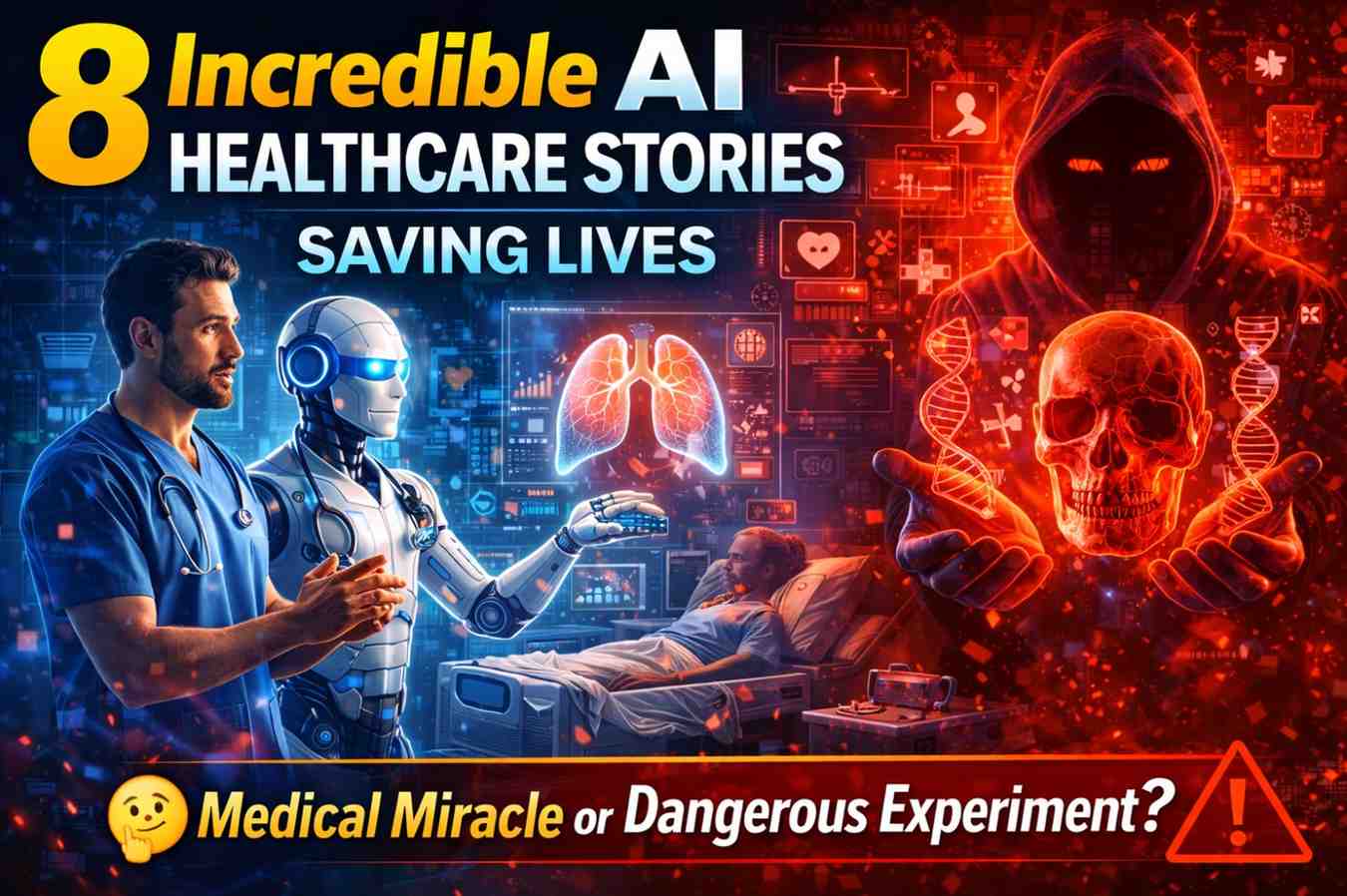
8 Incredible AI Healthcare Stories Saving Lives — Medical Miracle or Dangerous Experiment?
AI in healthcare is reshaping the medical landscape in unprecedented ways, driving innovation that can save lives while also raising ethical questions. While some of these developments are hailed as medical miracles, others lean towards being perceived as dangerous experiments. In this article, we explore eight incredible stories of AI medical innovation that showcase how artificial intelligence is being integrated into healthcare with life-saving results, along with a critical analysis of the potential risks involved.
1. AI-Powered Diagnostics: Revolutionizing Early Detection
One of the most promising applications of AI in healthcare lies in diagnostics. For instance, Google Health has developed an AI algorithm that analyzes mammograms with an accuracy that exceeds human radiologists. This innovative technology has shown a significant reduction in false positives and false negatives. By using deep learning techniques comparable to those employed in self-driving cars, the AI system can identify cancer at earlier stages, ultimately saving lives.
Accuracy Matters
The introduction of AI medical innovation in diagnosing diseases like breast cancer represents a game-changer. Early detection is crucial, and studies indicate that AI can dramatically enhance screening processes, making them more reliable and efficient.
2. Virtual Health Assistants: The Future of Patient Engagement
Healthcare automation AI is not limited to diagnostics alone; it extends into patient engagement through virtual health assistants. Tools like ChatGPT and other conversational agents are designed to interact with patients, providing information and reminders for medications or appointments. This level of engagement can lead to better adherence to treatment plans and improved health outcomes.
The Pros and Cons of AI Interaction
While the benefits of using virtual health assistants are significant, there are concerns regarding the quality of interactions, especially at critical moments. Ensuring that AI tools provide accurate information and maintain patient confidentiality is paramount.
3. AI in Genomic Research: Tailored Treatments on the Horizon
Genomic medicine is another frontier being transformed by AI in healthcare. For example, an AI system developed by IBM Watson has successfully analyzed complex genomic data to identify treatment options for patients with rare cancers. This personalized approach enables healthcare professionals to design tailored treatment plans, drastically improving survival rates.
Ethical Concerns and Data Privacy
While the results are promising, the implications for data privacy and consent in genomic research raise ethical questions. Patients need assurance that their genomic information is securely handled, underscoring the need for stringent regulations in AI medical innovation.
4. AI in Predictive Analytics: Anticipating Health Crises
Predictive analytics powered by AI technology can transform the healthcare landscape by anticipating health crises before they come to fruition. Algorithms that analyze patient data can identify patterns leading to serious health issues, allowing for preemptive measures to be taken. For instance, AI systems can predict complications in diabetic patients, such as severe hypoglycemia, enabling timely interventions.
Changing the Game for Preventive Care
This shift towards preventive care facilitated by AI in healthcare is revolutionary. When healthcare systems are equipped with such predictive capabilities, they can direct resources more effectively, ultimately saving lives and reducing overall healthcare costs.
5. Robotic Surgery: Precision at its Best
Robotic surgery systems are increasingly incorporating AI to enhance their precision and effectiveness. For example, the da Vinci Surgical System uses AI algorithms to aid in performing complex surgeries with minimal invasiveness. This allows surgeons to execute procedures with greater accuracy and less recovery time for patients.
Ensuring Safety in Surgical Procedures
While robotic surgery has shown success rates that are beneficial, there remains skepticism about the reliance on machines for intricate procedures. The potential for machine errors raises the question: How much should we trust AI medical innovation in surgery?
6. AI in Mental Health: Chatbots Offering Support
The mental health sector is also witnessing the impact of AI in healthcare through chatbots and mobile apps designed to provide emotional support. For instance, Woebot, an AI-powered chatbot, engages users in cognitive-behavioral therapy techniques, offering them strategies to manage anxiety and depression. This kind of healthcare automation AI provides round-the-clock access to mental health resources, a crucial element in today’s fast-paced world.
The Fine Line Between Support and Replacement
While chatbots like Woebot offer valuable support and accessibility, there is a fine line between enhancement and replacement of human therapists. Ethical considerations arise regarding when to refer patients to human professionals, emphasizing the need for clear guidelines in using AI in mental health care.
7. AI in Drug Discovery: Reducing Time and Costs
Drug discovery is notoriously time-consuming and expensive. However, AI is moderating this process remarkably. For instance, Atomwise uses AI algorithms to analyze molecular structures and predict how they will interact in the human body. This technology has the potential to accelerate the development of new medications, transitioning from years to mere months.
The Cost-Effectiveness Factor
Considering the rising costs of healthcare, AI-driven drug discovery represents a cost-effective solution. Yet, it poses questions about the thoroughness of the research. Can AI accomplish what years of clinical research has traditionally provided?
8. AI in Imaging Technologies: Enhanced Accuracy for Diagnosis
Imaging technologies have also undergone a transformation thanks to AI in healthcare. For instance, algorithms can analyze CT scans, MRIs, and X-rays far quicker than human radiologists, often flagging potential issues that might be missed by a human eye. This boost in diagnostic capability can lead to immediate treatment decisions, greatly affecting patient outcomes.
Balancing Speed with Vigilance
While the speed and efficiency brought about by AI imaging technologies are undeniably beneficial, the reliance on automated interpretation raises concerns over diagnostic vigilance. Human oversight remains a critical piece in ensuring the accuracy of diagnoses.
Conclusion: Medical Miracle or Dangerous Experiment?
AI in healthcare presents a dual-edged sword, promising medical miracles while also posing significant risks. The stories above showcase the tremendous potential of AI medical innovation to enhance patient care, improve diagnostic accuracy, and foster personalized treatment approaches. However, as we dive deeper into this new era of healthcare automation AI, we must remain vigilant in addressing ethical concerns, data privacy, and the balance between technological reliance and the human touch in medicine. As we shape the future of healthcare, it is crucial that we learn from these incredible stories and ensure that innovations bring us closer to the golden standard of patient safety and quality care.
“`
Related Articles
- AI marketing tricks
- AI Summit 2026
- AI Summit 2026
- AI Summit 2026
- artificial intelligence today
- artificial intelligence ai
- ai replacing humans
- ai future of work
- AI tools for government exam preparation
- best AI tools for government exam study
- AI tools for government exam success
- AI tools for easy government exam study
- Grok and Claude AI web scraping
- Grok AI automation
- Grok AI business automation
- Grok AI automation workflows
- AI automation systems
- how AI automation works
- AI automation vs traditional automation
- AI agents explained


Leave a Reply