
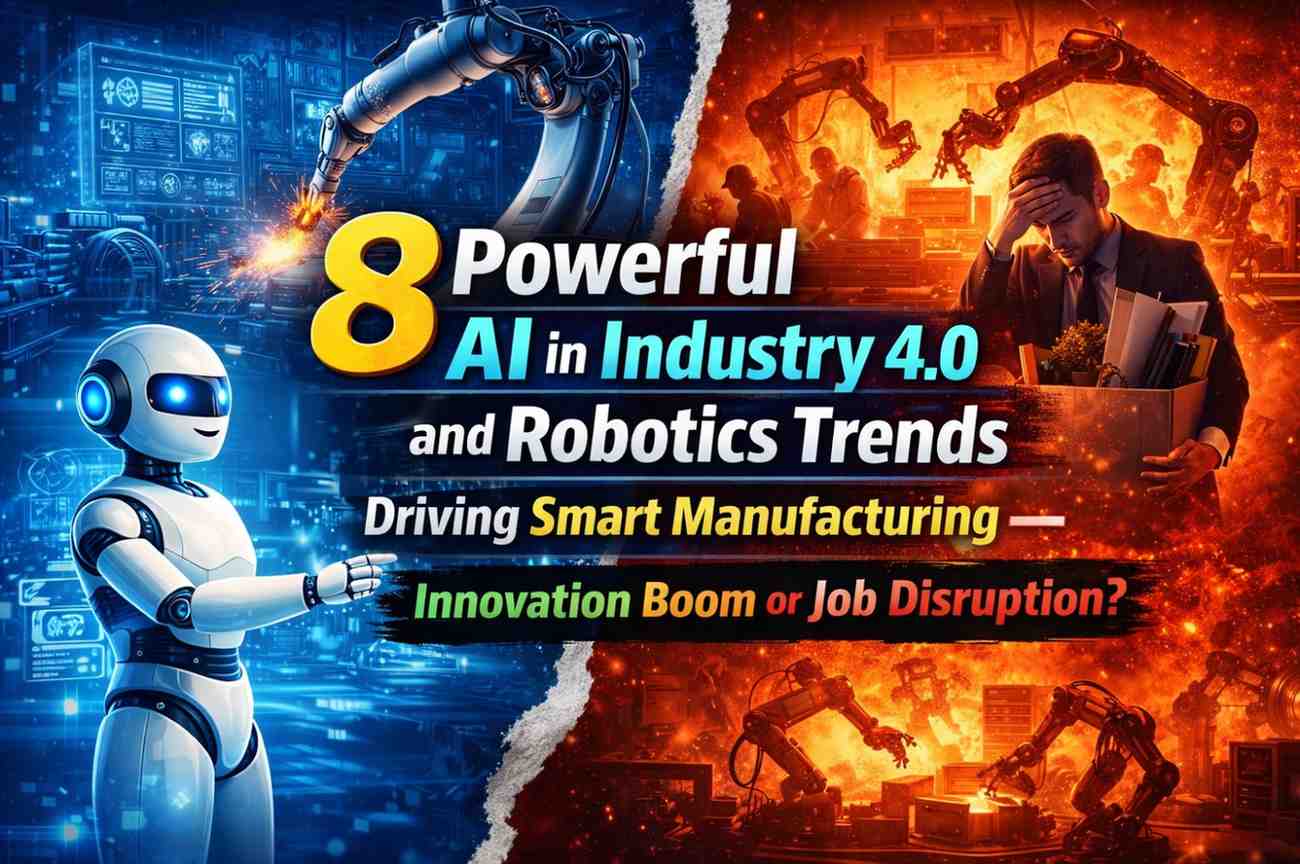
8 Revolutionary AI & Robotics Trends in Industry 4.0 — Massive Growth or Job Disruption?
The advent of AI in industry 4.0 has sparked a profound transformation across various sectors, marking the era of advanced technologies that drive efficiency, productivity, and innovation. As organizations adopt robotics automation and integrate smart manufacturing AI into their operations, the landscape of traditional manufacturing and industrial processes is evolving rapidly. However, with these advancements comes the critical question: Will these revolutionary changes lead to massive growth and job creation, or will they cause significant job disruption? In this article, we will explore eight trends in AI and robotics that are shaping Industry 4.0, analyzing both the opportunities and challenges they present.
Table of Contents
1. Intelligent Supply Chain Management
One of the first areas where AI in industry 4.0 is making a substantial impact is in the optimization of supply chain management. By utilizing machine learning algorithms and data analytics, companies can predict demand, manage inventory effectively, and streamline logistics processes.
Predictive Analytics
Predictive analytics powered by AI helps organizations anticipate market trends, plan for seasonal demands, and mitigate risks related to supply chain disruptions. This leads to better resource allocation and helps companies reduce waste.
Automated Decision-Making
Robotics automation plays a vital role here, as autonomous systems can conduct analyses and make supply chain decisions in real-time, significantly reducing operational delays and improving response times to market changes.
2. Enhanced Manufacturing Processes
At the core of smart manufacturing AI is the integration of machine learning and artificial intelligence into the production lines, leading to more efficient manufacturing processes. This trend involves automating specific tasks traditionally performed by human workers, improving quality, and maximizing output.
Quality Control through AI
AI systems equipped with advanced vision recognition technology can inspect products for defects far more accurately than human inspectors, ensuring high quality and reducing return rates.
Collaborative Robots (Cobots)
In conjunction with traditional robots, cobots work alongside human employees, assisting in tasks like assembly, packaging, and logistics. This creates a hybrid workforce that can enhance productivity while allowing human workers to focus on more complex and creative tasks.
3. Workforce Augmentation
While many fear that AI in industry 4.0 will result in job losses, the reality is that AI and robotics are more likely to augment human workers rather than replace them entirely. This phenomenon is often referred to as “hybrid intelligence.”
Training and Reskilling
As companies adopt robotics automation technologies, there will be an increased need for workforce training and upskilling. Workers will learn to interact with AI systems, analyze data, and manage automated processes, creating new roles and opportunities within the workforce.
Emphasis on Creativity and Problem-Solving
With machines handling repetitive and mundane tasks, human employees can focus on strategic planning, leadership, and innovation, driving businesses toward greater creativity and problem-solving capabilities.
4. Predictive Maintenance and Asset Management
AI in industry 4.0 is being leveraged to implement predictive maintenance strategies, which are critical for minimizing downtime and maximizing productivity across manufacturing operations.
IoT Integration
The Internet of Things (IoT) allows for real-time monitoring of equipment and machinery, providing invaluable data that AI can analyze to predict when maintenance is needed. This proactive approach helps organizations avoid unexpected breakdowns, reducing costs and improving operational efficiency.
Smart Asset Management
AI algorithms can also help companies manage assets more efficiently, ensuring that resources are utilized effectively and reducing waste in the production process. This leads to more sustainable manufacturing practices.
5. Advanced Analytics and Big Data
Big data analytics has become a cornerstone of smart manufacturing AI. With vast amounts of data generated every second, AI technologies help sift through and generate actionable insights from this data, influencing everything from production strategies to customer relations.
Data-Driven Decision Making
To make informed business decisions, organizations can utilize advanced analytics to identify patterns or trends in consumer behavior, market demand, and operational efficiency.
Real-Time Reporting
With AI, manufacturers can implement real-time reporting, helping leaders make optimal decisions quickly and adapt to market shifts, thereby enhancing responsiveness and agility in operations.
6. Enhanced Customer Experience through Customization
The human-centric nature of AI in industry 4.0 allows for greater product customization offerings. By leveraging AI to analyze consumer preferences and behaviors, manufacturers can provide tailored solutions that cater to individual needs.
Personalized Products
Companies no longer need to rely on one-size-fits-all production processes. Instead, smart manufacturing AI facilitates mass customization, where products can be quickly adapted to meet bespoke demands without sacrificing efficiency.
Improved Customer Interactions
AI chatbots and virtual assistants can handle customer inquiries and provide support 24/7, leading to enhanced customer satisfaction and loyalty through quick resolutions and personalized service interactions.
7. Sustainability and Environmental Responsibility
In recent years, industries have faced increased pressure to adopt sustainable practices. AI and robotics play a pivotal role in driving environmental responsibility in manufacturing processes.
Energy Efficiency
AI algorithms can monitor energy consumption and optimize operations to reduce energy waste, significantly lowering a company’s carbon footprint while also reducing operational costs.
Waste Management
Robotics automation assists in managing waste more effectively, sorting materials for recycling and ensuring that byproducts are minimized. This contributes to the broader goals of sustainability and corporate social responsibility.
8. Ethical Considerations and the Future
As we integrate more AI in industry 4.0 practices, ethical considerations regarding job displacement and the responsible use of technology come to the forefront. Striking a balance between innovation and societal impact is paramount.
Addressing Job Displacement
As industries move towards increased automation, developers and policymakers must work together to create adequate frameworks and policies that ensure transitioning workers have access to education and new job opportunities.
Regulatory Frameworks
Establishing regulatory frameworks around the use of AI technologies is crucial to ensure ethical practices in automation and the safe implementation of robotics in the workplace. This will help in alleviating fears related to privacy and job security while promoting innovation.
Conclusion
The future of AI in industry 4.0 presents vast opportunities and daunting challenges. While the integration of robotics automation and smart manufacturing AI undoubtedly contributes to enhanced productivity, quality, and sustainability, it is essential to approach these changes thoughtfully. By investing in training and workforce development, fostering creativity, and implementing ethical frameworks, we can harness the power of AI and robotics to not only drive massive growth but also ensure that workers are not left behind in the process. As we move further into the future, the goal should be to create an environment where technology empowers both businesses and their workforce, leading to a more prosperous and equitable future for all.
Related Articles
- AI marketing tricks
- AI Summit 2026
- AI Summit 2026
- AI Summit 2026
- artificial intelligence today
- artificial intelligence ai
- ai replacing humans
- ai future of work
- AI tools for government exam preparation
- best AI tools for government exam study
- AI tools for government exam success
- AI tools for easy government exam study
- Grok and Claude AI web scraping
- Grok AI automation
- Grok AI business automation
- Grok AI automation workflows
- AI automation systems
- how AI automation works
- AI automation vs traditional automation
- AI agents explained



Leave a Reply