
AI inventions is becoming one of the fastest growing opportunities in the AI economy. Many entrepreneurs are exploring AI inventions to build scalable online income streams.
Table of Contents
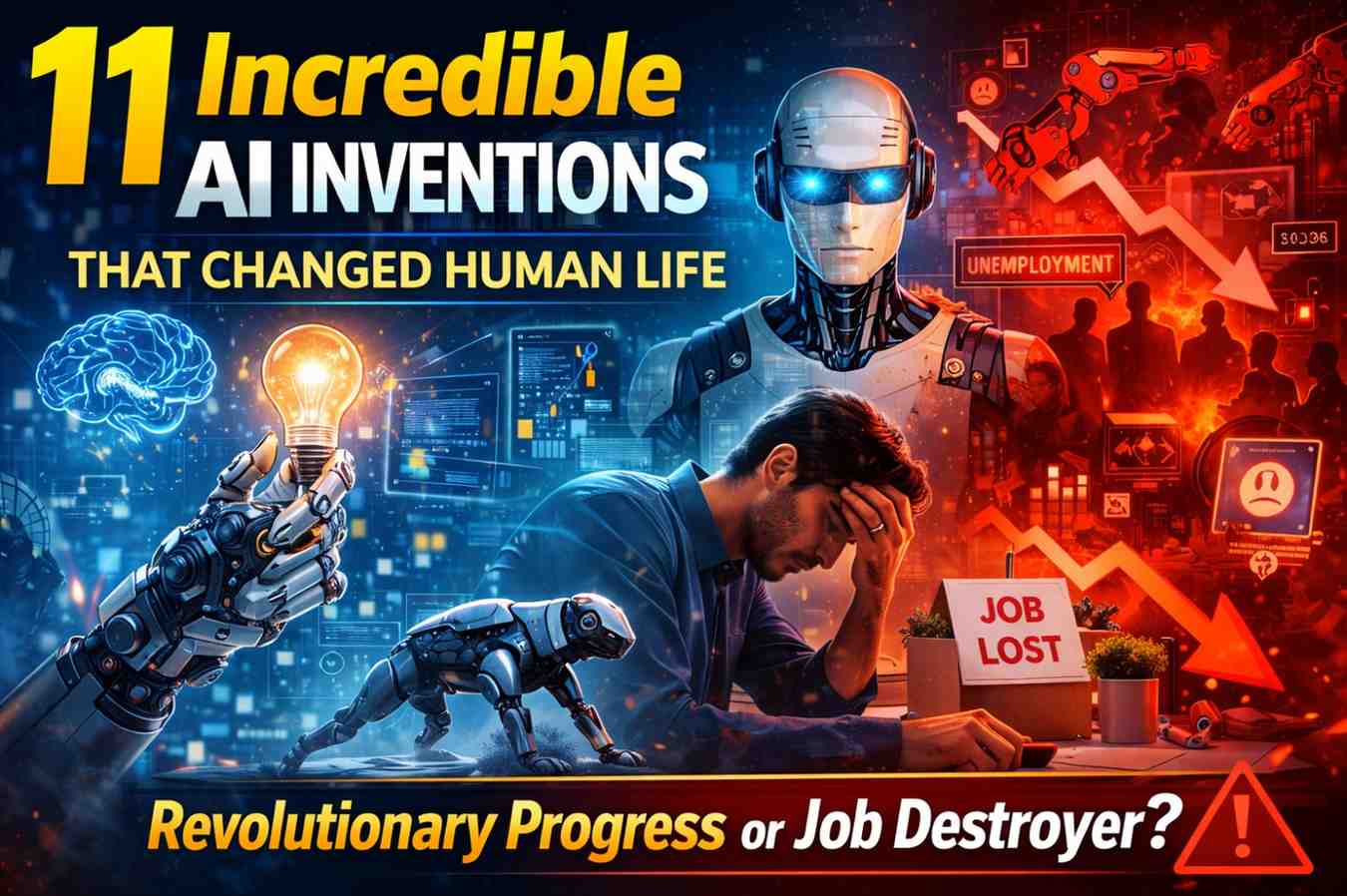
11 Incredible AI Inventions That Changed Human Life — Revolutionary Progress or Job Destroyer?
Artificial intelligence (AI) inventions have increasingly reshaped our world, influencing everything from healthcare to finance, and even our daily interactions. The advent of AI inventions has sparked controversy and conversation around their impact on society. While these innovations promise to enhance productivity and efficiency, they also raise concerns about job displacement and ethical considerations. In this article, we will explore eleven revolutionary AI inventions that have significantly altered human life. We will also examine the broader AI impact on society, evaluating whether these artificial intelligence innovations represent progress or a challenge to our livelihoods.
1. AI in Healthcare: Revolutionizing Patient Care
One of the most significant sectors transformed by AI inventions is healthcare. From diagnosis to treatment plans, AI has introduced numerous innovations that are enhancing patient care. Machine learning algorithms can analyze vast datasets to identify patterns that are often invisible to human doctors. This capability allows for early detection of diseases such as cancer, improving prognosis and survival rates. AI-powered chatbots provide patients with instant medical advice, while robotic surgical systems assist surgeons in performing complex procedures with enhanced precision.
AI Impact on Diagnostics
- Data Analysis: AI can assess millions of medical records in seconds, pinpointing potential health risks.
- Early Detection: Machine learning algorithms can identify diseases at much earlier stages than traditional methods.
These advancements not only save lives but also reduce the workload on healthcare professionals, allowing them to focus on direct patient care. However, the reliance on AI inventions raises questions about data privacy and the potential for bias in algorithms, making it crucial to approach these innovations with caution.
2. Autonomous Vehicles: The Future of Transportation
Autonomous vehicles represent one of the most exciting AI inventions of our time. Companies like Tesla, Google, and Uber are at the forefront of developing self-driving technology. These innovations rely heavily on machine learning algorithms that process data from sensors and cameras to navigate roads. Autonomous vehicles promise to revolutionize transportation by reducing traffic accidents, lowering emissions, and providing mobility to those unable to drive.
The Dilemma of Job Displacement
- Potential Job Losses: The advent of autonomous vehicles poses a significant threat to driving jobs, from taxi drivers to truckers.
- New Opportunities: On the flip side, the technology creates jobs in AI development, vehicle maintenance, and infrastructure adaptation.
The juxtaposition of benefits and drawbacks makes the discussion around autonomous vehicles complex, emphasizing the need for regulatory frameworks to ensure a balanced transition.
3. AI in Agriculture: Optimizing Food Production
AI inventions are also making significant strides in agriculture. Smart farming technologies powered by artificial intelligence innovations allow farmers to optimize crop yields, manage resources more efficiently, and reduce environmental impact. AI algorithms analyze data from soil sensors, weather forecasts, and satellite imagery to provide insights on crop health and irrigation needs.
Efficient Resource Management
- Precision Farming: With the help of AI, farmers can apply fertilizers and pesticides more judiciously, minimizing waste and maximizing yield.
- Drone Technology: AI-controlled drones monitor crop health, helping farmers detect issues early on.
The use of AI in agriculture not only enhances food security but also fosters sustainable practices that can alleviate some issues related to climate change.
4. Chatbots and Virtual Assistants: Redefining Customer Service
The rise of chatbots and virtual assistants is another remarkable development in the realm of AI inventions. Businesses across various industries are utilizing these tools to improve customer service and engagement. Chatbots can handle inquiries, provide recommendations, and even facilitate transactions, all in real-time.
The Future of Customer Interaction
- 24/7 Availability: Chatbots ensure that customer support is available around the clock, enhancing user satisfaction.
- Cost Efficiency: Businesses can reduce operational costs by automating repetitive tasks typically handled by human agents.
Despite the efficiency these AI inventions bring, concerns about the human touch in customer service remain, prompting discussions about the balance between automation and personal interaction.
5. AI in Finance: Transforming Banking and Investment
AI innovations are making waves in the finance sector, where algorithms for trading, risk assessment, and customer profiling are changing the landscape. AI-driven analytics enable financial institutions to assess credit risk more accurately and detect fraudulent activities in real-time, ultimately protecting consumer interests.
Enhanced Decision-Making
- Algorithmic Trading: AI algorithms can execute trades at speeds and efficiencies that human traders simply cannot match.
- Fraud Detection: Machine learning systems can identify suspicious patterns in transactions, safeguarding against fraud.
While these advancements enhance operational efficiency, they also raise concerns regarding job losses in traditional banking roles, prompting a debate about the balance of AI impact on society.
6. AI in Employment: The Automation Controversy
The integration of AI inventions across various fields has led to increased productivity, but it has also ignited heated discussions about job displacement. Many fear that the rise of AI will result in significant job losses, especially in sectors that rely on routine tasks. However, others argue that AI will create new job opportunities that focus on human-centric skills.
The Need for Reskilling
- Job Evolution: Many jobs will evolve rather than disappear, demanding new skills and adaptability in the workforce.
- Investment in Education: To harness the potential of AI, investment in education and training is crucial to prepare workers for the new landscape.
As AI continues to advance, society must find a balance between embracing technological progress and safeguarding employment opportunities.
7. AI in Marketing: Personalizing Consumer Experiences
AI inventions in marketing are transforming how businesses reach and engage their customers. Machine learning algorithms analyze consumer behavior and preferences, helping companies deliver personalized marketing experiences that resonate with their audiences. From targeted advertising to content recommendation systems, AI has revolutionized marketing strategies.
The Double-Edged Sword of Targeted Advertisements
- Increased Effectiveness: Brands can tailor their messages to specific demographics, resulting in higher conversion rates.
- Privacy Concerns: The use of personal data for advertising raises questions about consent and data protection.
As businesses leverage AI for marketing, they must navigate the ethical considerations that come with utilizing personal data.
8. Smart Homes: Enhancing Daily Living
AI inventions are changing the way we live at home through smart home technologies. Devices like smart speakers, security cameras, and thermostats learn from user interactions and optimize based on individual behaviors, leading to increased convenience and energy efficiency.
The Benefits of Automation
- Energy Savings: Smart systems analyze usage patterns, allowing users to reduce energy consumption effortlessly.
- Increased Security: AI-equipped security systems can detect unusual activity and send alerts to homeowners.
While smart home technologies offer numerous benefits, they also raise concerns about surveillance and data security, making consumer awareness essential.
9. AI in Education: Personalized Learning
AI inventions are making a significant impact in education, providing personalized learning experiences that cater to individual student needs. Intelligent tutoring systems adapt content to suit different learning styles and paces, enhancing educational outcomes.
Bridging Gaps in Education
- Accessibility: AI can provide support to students with disabilities, making learning more inclusive.
- Data-Driven Insights: Educators can utilize AI to analyze student performance and tailor interventions accordingly.
As AI continues to shape education, it is vital to ensure that these technologies are used responsibly and equitably to avoid widening existing inequalities.
10. AI in Entertainment: Creating New Experiences
The realm of entertainment has been significantly transformed by AI inventions. Algorithms enhance content recommendations on streaming platforms and even contribute to the creation of music and films. AI-driven tools enable artists and creators to explore new possibilities, reshaping the creative landscape.
Innovative Content Creation
- Content Personalization: AI analyzes viewer behavior, delivering curated suggestions that enhance user engagement.
- Creative Assistance: AI can generate ideas or even complete pieces of art, prompting discussions about authorship and creativity.
While AI can augment creativity, it raises questions about the authenticity of art and the value of human expression in creative industries.
11. The Future of AI: Balancing Innovation and Ethics
As we reflect on the incredible AI inventions that have changed human life, it becomes clear that we stand at a pivotal crossroads. The AI impact on society is profound, offering immense potential and posing significant risks. Striking a balance between harnessing the benefits of artificial intelligence innovations and addressing the ethical implications is essential for sustainable progress.
A Call for Responsible AI Development
- Ethical Guidelines: Establishing frameworks for responsible AI use can mitigate risks associated with data privacy and bias.
- Public Awareness: Engaging in dialogues about AI’s societal impact will empower individuals to navigate an increasingly automated world.
As we embrace the future of AI inventions, we must prioritize ethical considerations to ensure that these technologies positively contribute to society and improve the human experience. The journey of artificial intelligence is only just beginning, and the path we choose will shape the future for generations to come.
In conclusion, the spectrum of AI inventions spans many domains, presenting both revolutionary progress and daunting challenges. As we harness these artificial intelligence innovations, a collaborative effort is needed to address the societal implications, fostering a future where technology and humanity thrive together.
Related Articles
- AI marketing tricks
- AI Summit 2026
- AI Summit 2026
- AI Summit 2026
- artificial intelligence today
- artificial intelligence ai
- ai replacing humans
- ai future of work
- AI tools for government exam preparation
- best AI tools for government exam study
- AI tools for government exam success
- AI tools for easy government exam study
- Grok and Claude AI web scraping
- Grok AI automation
- Grok AI business automation
- Grok AI automation workflows
- AI automation systems
- how AI automation works
- AI automation vs traditional automation
- AI agents explained

Leave a Reply